Alternative.tools
CategoryGuidesHow-toBlogPricing
Submit your Website
Alternative.tools
Submit
Alternative.tools

Alternative.tools is an independent platform dedicated to unbiased reviews of newly launched websites, tools, and products — analyzing everything from their features to their full potential. Our goal is to be objective, simple, and your first stop when researching a new tool to grow your business, helping you discover great alternatives to the ones you already use.

Helping founders and makers get discovered.

Product
  • Submit Website
  • Pricing
  • Categories
Guides
  • All Guides
  • How-to Playbooks
  • Best for…
  • Directory Submission
  • AI / LLM APIs
  • Reddit Marketing
  • Stripe Alternatives
  • SEO Tools
Resources
  • About Us
  • Submission Guidelines
  • Glossary
  • Blog
  • SaaS Payments
  • Google Graveyard
  • Sitemap
  • LLMs.txt
Legal
  • Privacy Policy
  • Terms of Service
  • Cookie Policy
  • Contact
© 2026 Alternative.tools

On this page

  • Overview
  • How to choose
  • Comparison
  • Feature comparison
  • Stripe Billing
  • Chargebee
  • Lago
  • Polar
  • FAQ
  • The verdict
Summarize with AI
Web Review

Web Review

Ad

The website review directory that helps you rank on Google, ChatGPT, Claude, Gemini & Perplexity with dofollow backlinks and AI reviews.

HomeGuidesBest Subscription Billing Software in 2026

Best Subscription Billing Software in 2026

Four platforms for recurring revenue, from a Stripe add-on to open-source metered billing and a tax-handling Merchant of Record.

Updated August 2026
Share:

On this page

  • Overview
  • How to choose
  • Comparison
  • Feature comparison
  • Stripe Billing
  • Chargebee
  • Lago
  • Polar
  • FAQ
  • The verdict
Summarize with AI
Web Review

Web Review

Ad

The website review directory that helps you rank on Google, ChatGPT, Claude, Gemini & Perplexity with dofollow backlinks and AI reviews.

Key takeaways

  • 1. Stripe BillingMost popular

    Companies already running on Stripe that want recurring billing without adding a new vendor.

Visit Stripe Billing
  • 2. ChargebeeEnterprise

    Growing and enterprise SaaS teams that need gateway flexibility and deep subscription tooling.

  • 3. LagoOpen source

    Usage-based businesses that want a self-hostable, developer-first metering and billing engine.

  • 4. PolarHandles tax

    Developers and small SaaS teams that want subscriptions plus fully handled global tax.

  • Overview

    Recurring revenue lives or dies by billing. The right platform manages plans, proration, invoicing, dunning, and increasingly usage-based pricing without forcing you to rebuild the logic yourself. But the market splits sharply: some tools are thin add-ons on top of a payment processor, while others are full standalone platforms or open-source engines you can host yourself.

    We compared four popular options for 2026. Stripe Billing is the default for teams already on Stripe. Chargebee targets enterprises juggling multiple gateways. Lago is the open-source pick for usage-based and metered billing. Polar is a Merchant of Record that also handles your sales tax and VAT, which pairs well with our payments guide.

    How to choose

    Before you pick, weigh these against your own situation — the right choice depends on your stage, budget, and goals.

    • Dunning & recovery — Prioritize tools with smart retries, card-updater, and pre-dunning emails, since involuntary churn from failed payments can quietly cost you 5-10% of MRR.

    • Pricing model flexibility — Confirm it natively supports your model (per-seat, usage-based metering, tiered, hybrid) so you are not forced to hack around a fixed subscription-only engine.

    • Tax & compliance — Check whether it handles sales tax, VAT, and GST automatically or acts as merchant of record, or budget for a separate tool like Avalara or a MoR to stay compliant.

    • Proration & plan changes — Test how it handles mid-cycle upgrades, downgrades, and pauses, because clean proration and credits directly affect revenue accuracy and support load.

    • Revenue reporting & accrual — Look for built-in MRR/ARR analytics and revenue-recognition exports that reconcile with your accounting, so finance is not rebuilding numbers in spreadsheets.

    Comparison at a glance

    ToolBest forModelStarts atStandout
    Stripe BillingTeams already on StripeAdd-on to Stripe~0.7% of billing volume (verify)Deep Stripe ecosystem integration
    ChargebeeEnterprise subscription managementStandalone platformFree tier, then ~0.75% of revenue (verify)Multi-gateway and complex billing support
    LagoUsage-based and metered billingOpen sourceFree self-hosted, paid cloud (verify)Self-hostable metering engine
    PolarSelling software without tax headachesMerchant of Record~4% + 40 cents per transaction (verify)Handles sales tax and VAT for you

    Pricing and features change often — verify current details on each provider's site. Last checked August 2026.

    Feature comparison

    FeatureStripe BillingChargebeeLagoPolar
    Subscriptions
    Usage-based / metered billingPartial
    Invoicing
    Handles tax (MoR)
    Open source
    Dunning / recoveryPartialPartial

    "Partial" means available via add-on, in beta, or more limited than competitors.

    Stripe Billing

    Most popular
    Visit Stripe Billing

    Stripe Billing layers subscription and invoicing logic on top of Stripe's payment processing. If you already take payments through Stripe, turning on Billing is close to frictionless: plans, proration, trials, coupons, and metered usage all flow through the same API and dashboard you already know.

    The catch is tax. Stripe Billing is not a Merchant of Record, so you remain the seller of record and are responsible for collecting and remitting sales tax and VAT yourself (Stripe Tax helps calculate it, at extra cost). Pricing is approximately 0.7% of billing volume on top of standard processing fees (verify), which can add up at scale.

    Best for: Companies already running on Stripe that want recurring billing without adding a new vendor.
    Pros

    • Seamless if you already use Stripe for payments
    • Powerful, well-documented API and developer tooling
    • Strong support for metered and usage-based billing
    • Mature dunning and retry logic to recover failed payments

    Cons

    • You are the seller of record and handle tax yourself
    • Billing fee stacks on top of standard processing fees
    • Less useful if you use gateways other than Stripe
    • Advanced revenue features can require additional paid add-ons
    Visit Stripe Billing

    Chargebee

    Enterprise
    Visit Chargebee

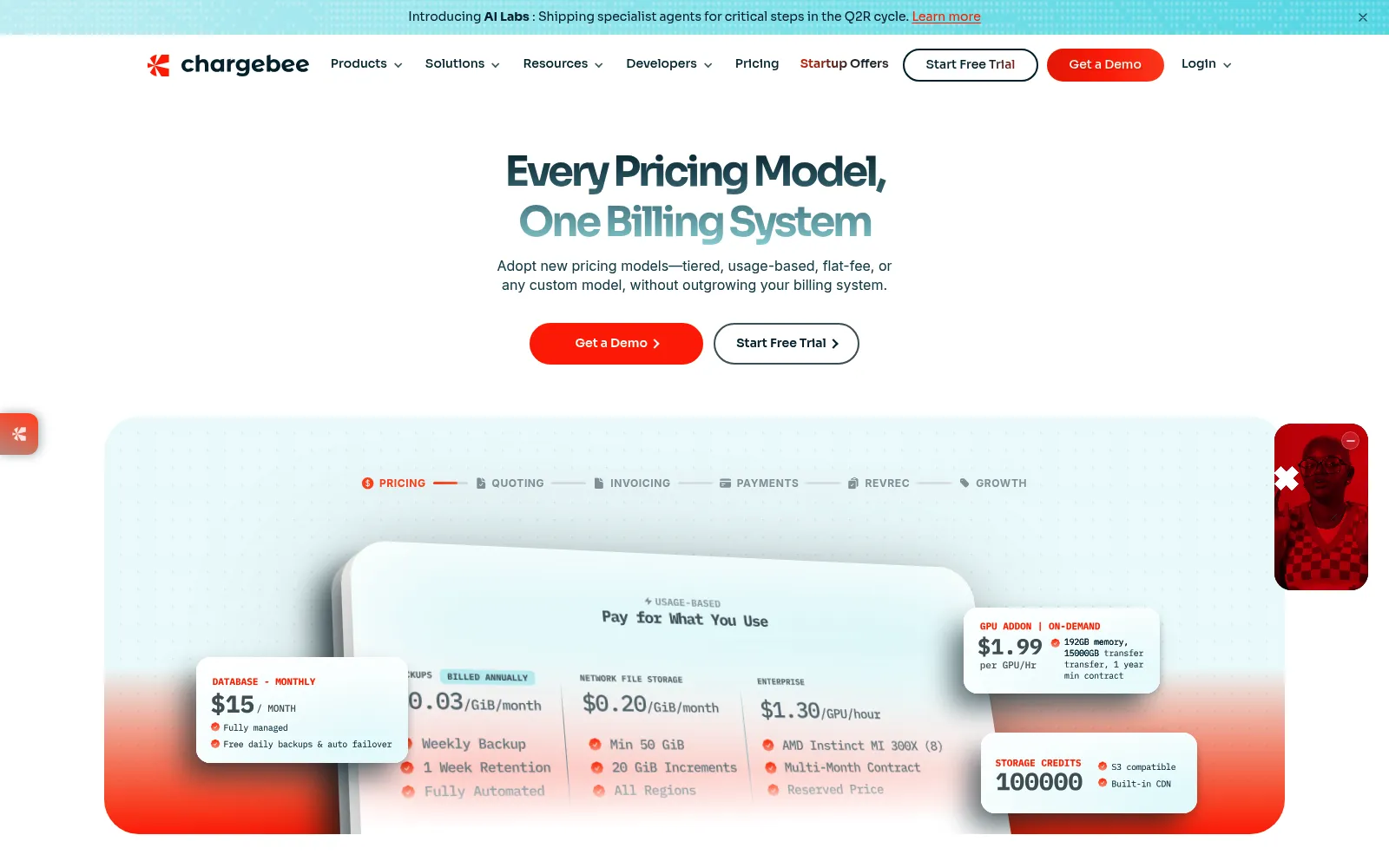
    Chargebee is a standalone subscription management platform that sits above your payment gateways rather than replacing them. It integrates with Stripe, Braintree, Adyen, and many others, which makes it a fit for businesses that want billing logic decoupled from any single processor or that operate across multiple regions and gateways.

    The platform leans enterprise: complex plan hierarchies, entitlements, revenue recognition, and reporting are all first-class. That power comes with more setup and a pricing model that scales with revenue. There is a starter tier for small companies, then percentage-of-revenue pricing above a threshold (verify).

    Best for: Growing and enterprise SaaS teams that need gateway flexibility and deep subscription tooling.

    Pros

    • Integrates with many payment gateways, not just one
    • Rich support for complex plans, entitlements, and proration
    • Built-in revenue recognition and reporting
    • Strong for multi-region and multi-currency operations

    Cons

    • More complex to set up than a simple add-on
    • Revenue-based pricing gets expensive at scale
    • You still handle tax unless you add a MoR
    • Can be more than small teams need
    Visit Chargebee

    Lago

    Open source
    Visit Lago

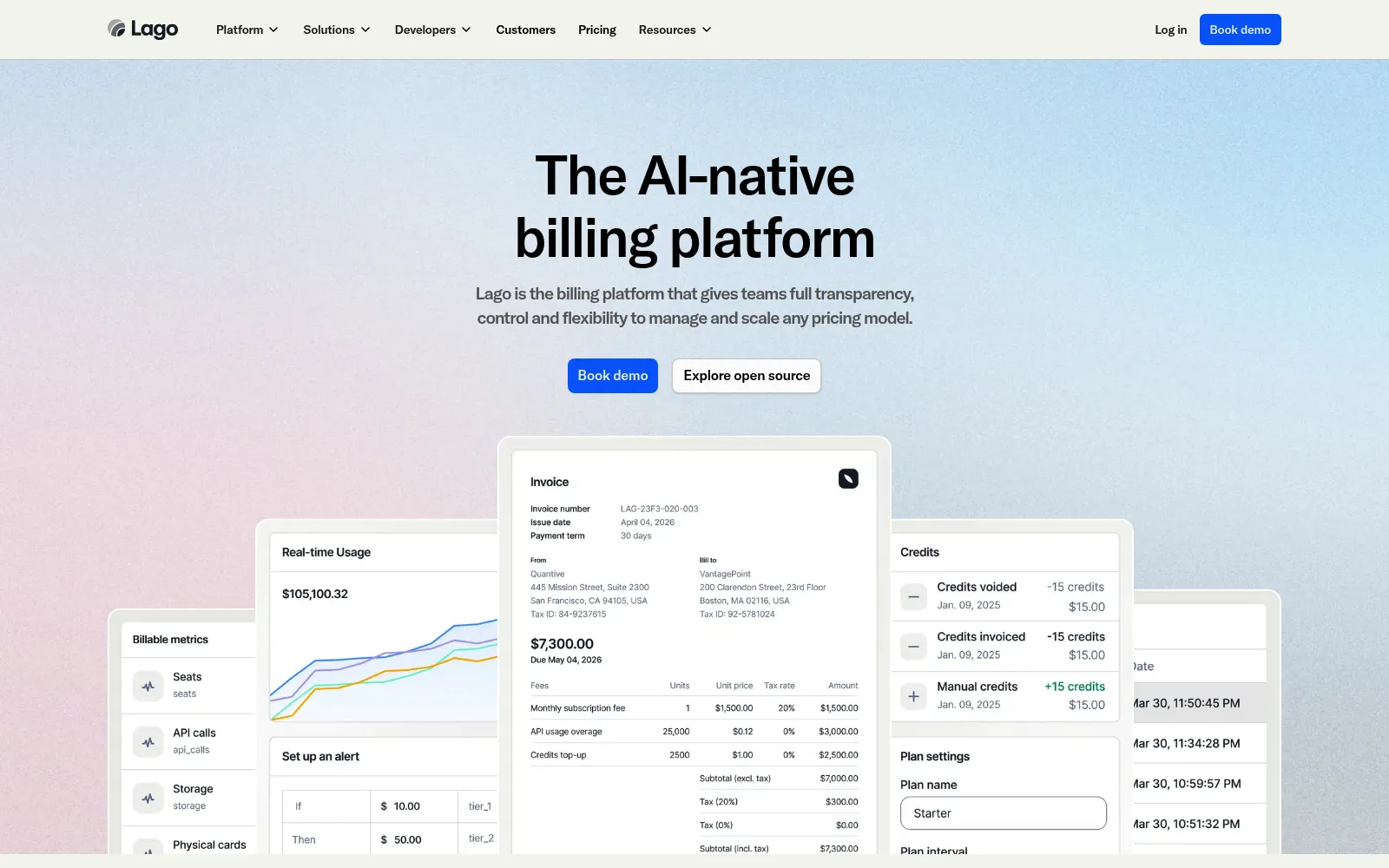
    Lago is an open-source billing platform built around usage-based and metered pricing. It is designed for teams whose pricing depends on consumption (API calls, compute, seats, events) and who want a metering engine they can inspect, extend, and run on their own infrastructure.

    Because it is open source, you can self-host Lago for free and keep billing data fully under your control, or use the managed cloud offering if you would rather not operate it. It handles subscriptions and invoicing too, but its real strength is flexible, high-volume metering. Pricing for the cloud plans is usage-tiered (verify).

    Best for: Usage-based businesses that want a self-hostable, developer-first metering and billing engine.

    Pros

    • Open source and self-hostable at no license cost
    • Purpose-built for usage-based and metered billing
    • Full control over billing data and infrastructure
    • Managed cloud option if you prefer not to self-host

    Cons

    • Self-hosting requires engineering time to run and maintain
    • Younger ecosystem than incumbent platforms
    • Not a Merchant of Record, so you handle tax
    • Fewer turnkey integrations than larger vendors
    Visit Lago

    Polar

    Handles tax
    Visit Polar

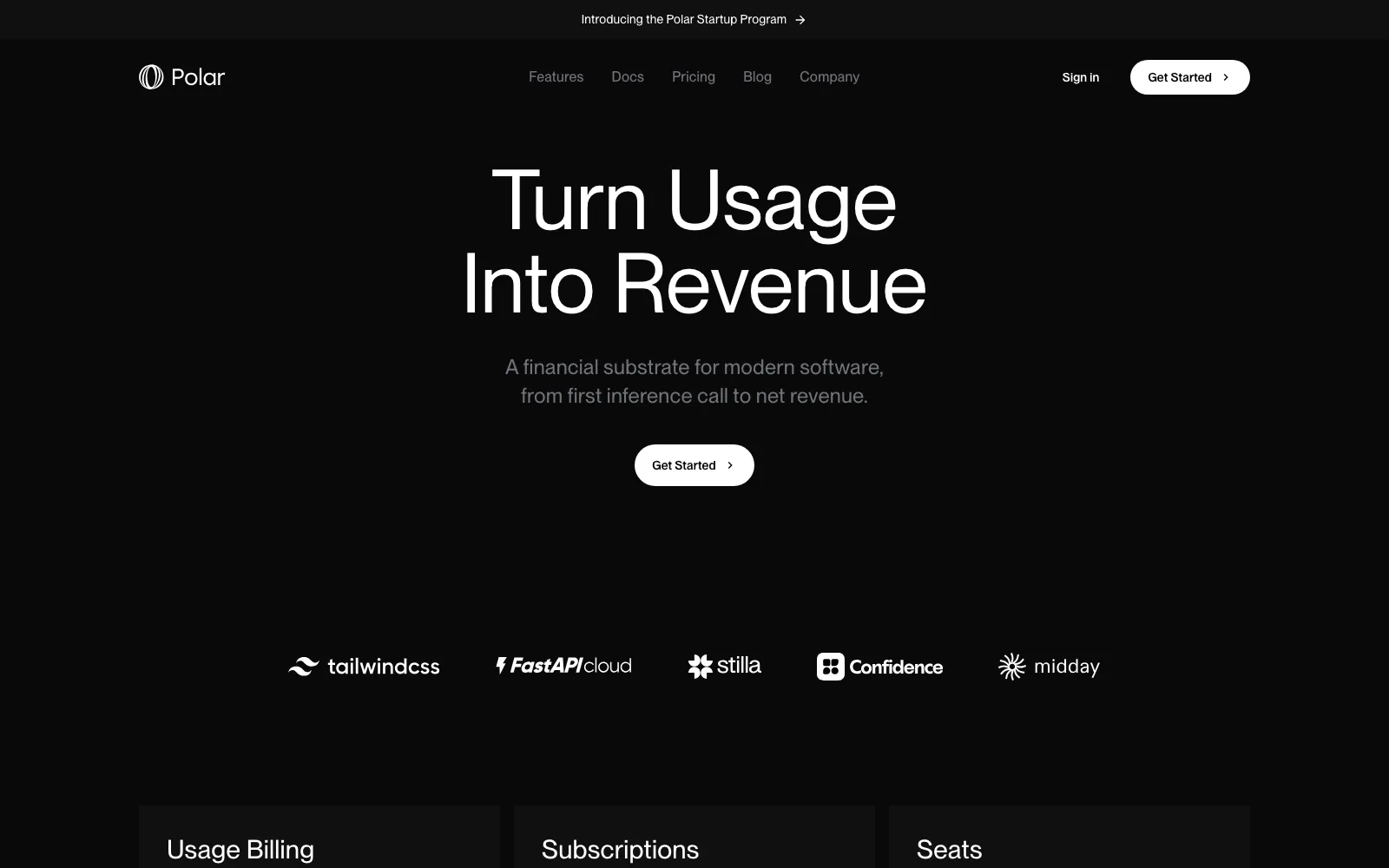
    Polar is an open-source Merchant of Record built for developers selling digital products and subscriptions. As the MoR, Polar becomes the legal seller, which means it collects and remits sales tax and VAT on your behalf. That removes one of the hardest parts of selling globally and is why it pairs naturally with our payments guide.

    Because it is open source, you get transparency into how it works, plus a modern API and checkout aimed at SaaS and indie developers. The tradeoff is a higher per-transaction rate than a bare processor, since that fee bundles in tax compliance, payouts, and merchant-of-record liability. Rates are approximately 4% plus 40 cents per transaction (verify).

    Best for: Developers and small SaaS teams that want subscriptions plus fully handled global tax.

    Pros

    • Merchant of Record handles sales tax and VAT for you
    • Open source with a modern, developer-friendly API
    • Simple global selling without registering for tax everywhere
    • Built for SaaS and digital product subscriptions

    Cons

    • Higher per-transaction fees than a raw processor
    • Smaller and newer than established billing platforms
    • Less suited to very complex enterprise billing
    • MoR model means less direct control over the transaction
    Visit Polar

    Frequently asked questions

    What is the difference between a billing platform and a Merchant of Record?+

    A billing platform like Stripe Billing or Chargebee manages your subscriptions and invoices, but you remain the seller of record and are responsible for collecting and remitting tax. A Merchant of Record like Polar becomes the legal seller and handles sales tax and VAT compliance for you, in exchange for a higher fee.

    Which subscription billing tool is best for usage-based pricing?+

    Lago is purpose-built for usage-based and metered billing and is open source, making it a strong choice for consumption pricing. Stripe Billing and Chargebee also support metered billing well, so if you are already on either, you may not need a separate tool.

    Do I need Stripe Billing if I already use Stripe?+

    If you take payments through Stripe and need recurring billing, Stripe Billing is the lowest-friction option because it uses the same API and dashboard. If you want gateway flexibility or handled tax, a standalone platform or Merchant of Record may serve you better.

    Can I self-host my subscription billing?+

    Yes. Both Lago and Polar are open source. Lago can be fully self-hosted for free, giving you control over billing data and infrastructure. Polar is open source too, though it is typically used as a hosted Merchant of Record so it can handle tax compliance.

    How much does subscription billing software cost?+

    Costs vary by model. Stripe Billing adds roughly 0.7% of billing volume on top of processing fees, Chargebee charges around 0.75% of revenue above a free tier, Lago is free to self-host, and Polar runs about 4% plus 40 cents per transaction because it bundles in tax. All figures are approximate and should be verified.

    The verdict

    If you already run on Stripe, Stripe Billing is the pragmatic default. Enterprises needing multi-gateway flexibility should look at Chargebee. Usage-based businesses that want control and open source should choose Lago. And if you want to sell globally without touching tax, Polar as a Merchant of Record is the standout.

    Related guides

    Guide · DirectoriesBest Directory Submission Services in 2026Guide · SaaSHow to Start a SaaS in 2026Guide · AIHow to Start an AI Startup in 2026Guide · BloggingHow to Start a Blog in 2026
    Alternative.tools

    Alternative.tools review team

    We are the editorial team behind Alternative.tools, an independent platform for unbiased reviews of newly launched websites, tools, and products. We test tools hands-on, track pricing and features as they change, and publish practical comparisons and how-to playbooks so you can choose the right tool faster, without the marketing spin.

    About usAll guidesHow-to playbooks

    Sources — official pricing/docs:

    Stripe BillingChargebeeLagoPolar

    Building a SaaS? Submit it to the directory to get discovered.