Products needing image, audio, or custom/open models without managing GPU infrastructure.
Overview
You do not need a research lab to start an AI company in 2026, you need a real problem that a large language model can solve. The path is well-worn now: find a painful, narrow problem AI is genuinely good at (drafting, summarizing, extracting, classifying, coding); pick a model and API to power it; build a thin, focused product around that capability; wire in authentication and billing so you can charge from day one; then ship it and put it in front of real users to learn what they will actually pay for. The hard part is not the model, the frontier APIs are excellent out of the box, it is distribution, speed to launch, and picking a wedge narrow enough to win.
The good news is that every layer of the stack is now a commodity you can rent. Below are the five strongest tools and building blocks for launching an AI product this year, a starter kit to skip the boilerplate, the LLM APIs to power your core feature, the framework that ties model calls to your UI, and a way to run open or custom models when the big APIs are not enough. They are ranked on merit for a founder who wants to go from idea to paying users in weeks, not months.
How to choose
Before you pick, weigh these against your own situation — the right choice depends on your stage, budget, and goals.
Model flexibility — Choose an SDK or gateway that lets you swap between LLM providers so you are not stranded if one changes pricing, limits, or quality.
Token cost and latency — Compare per-token pricing and response speed at your expected volume, because inference costs can dwarf every other line item at scale.
Rate limits and scaling — Verify the API's throughput tiers and how quickly you can raise limits, since demand spikes will otherwise throttle your product.
Data privacy terms — Confirm whether prompts and outputs are retained or used for training, which matters for compliance and for handling customer data.
Streaming and tooling support — Ensure the SDK supports streaming, function or tool calling, and structured outputs so you can build responsive, agentic features.
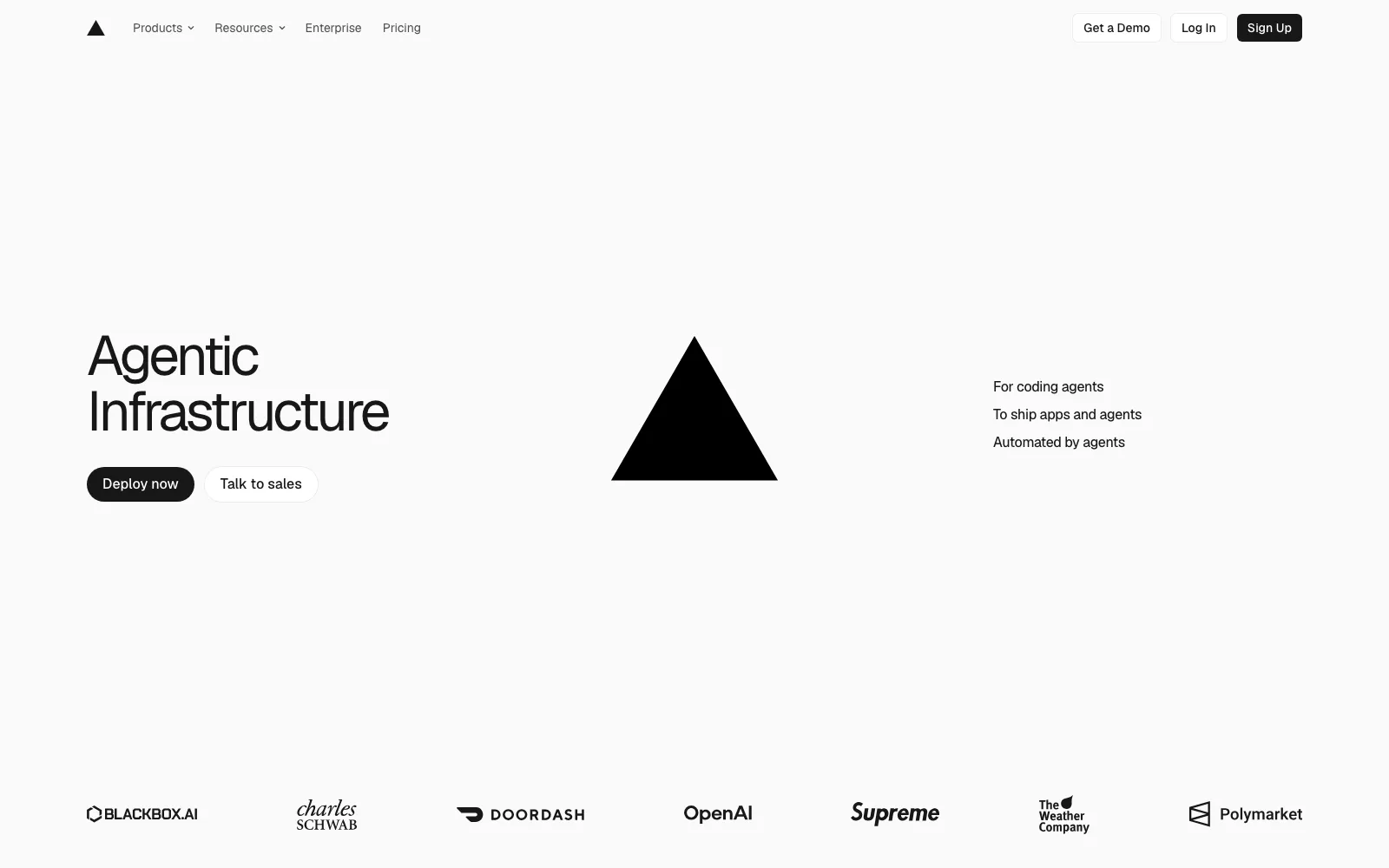
The Vercel AI SDK is the connective tissue of a modern AI product: a single, streaming-first TypeScript library that calls Claude, GPT, Gemini, and dozens of other models through one unified interface, with first-class hooks for React, Next.js, Svelte, and Vue. It handles the parts that are tedious to build yourself, token streaming, tool calling, structured output, and agent loops, so you spend your time on the product, not plumbing. In 2026 it added Workflows (durable long-running agents), Sandbox (secure agent code execution), and AI Elements (prebuilt chat UI components).
For an indie founder this is the best single place to start, because it is free, open source, and model-agnostic: you can prototype against one model and switch to another with a one-line change, never locking yourself in. It pairs naturally with a Next.js boilerplate for the rest of the app, and with the optional AI Gateway you get zero-markup access to 100+ models behind one key. Start here, add a model API, and you have a working AI feature the same day.
Best for:Founders building the AI feature and UI in TypeScript/Next.js who want to stay model-agnostic.
Pros
Free, open source, and MIT-licensed, no platform fee
Unified API across 16+ providers; swap models in one line
Streaming, tool calling, and structured output built in
Prebuilt AI Elements UI and framework hooks (React/Next/Svelte/Vue)
Cons
TypeScript/JavaScript ecosystem only (no Python)
It is a framework, not a product, you still build everything around it
No auth, billing, or database included
Advanced features tie in most cleanly when you deploy on Vercel
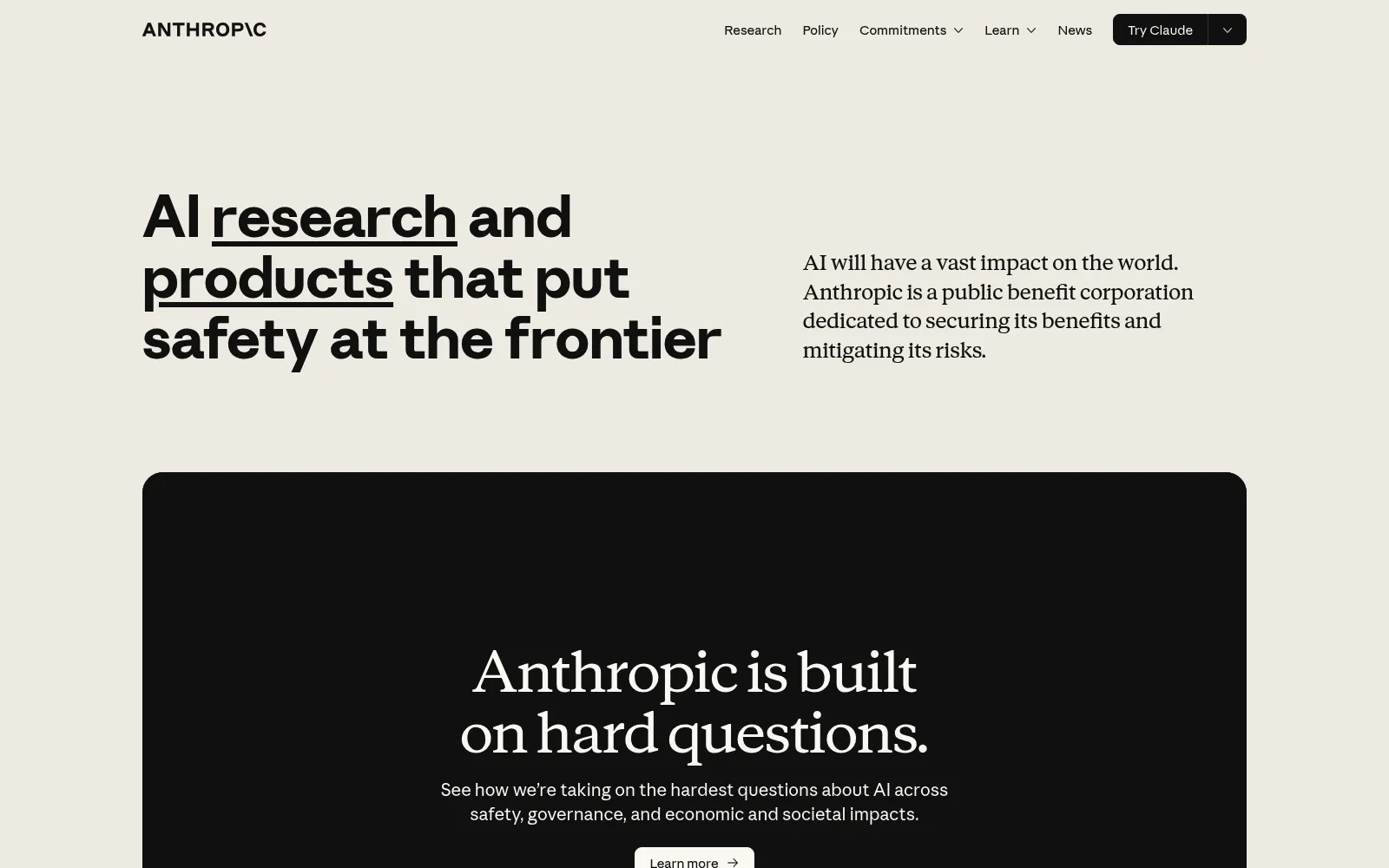
Claude is one of the strongest models available in 2026 and a genuinely leading choice for the reasoning-heavy, agentic, and coding workloads that most AI startups are built on. The API is clean and pay-as-you-go, spanning a lineup from the fast, cheap Haiku tier to the flagship Opus tier, all with a large context window, prompt caching, tool use, streaming, and structured outputs. For products where output quality is the differentiator, code generation, document analysis, customer-facing agents, Claude is often the model founders standardize on.
Pricing is per-token with no minimums, so you pay only for what you use, and cost levers like prompt caching (cache reads at roughly a tenth of input price) and the Batch API (50% off) make it affordable to scale. Because the Vercel AI SDK and every gateway support Claude natively, you can adopt it as your primary model today and still keep the freedom to route to others. Make it your default and benchmark alternatives against it.
Best for:Products where model quality on reasoning, coding, or agents is the core value.
Pros
Leading quality on coding, agentic, and long-context tasks
Simple pay-as-you-go pricing, no minimums or seats
Prompt caching and Batch API sharply cut cost at scale
First-class support in the AI SDK, gateways, and every framework
Cons
Single provider, build in a fallback for resilience
Frontier (Opus-tier) tokens cost more than smaller models
Token costs can surprise you without caching and limits
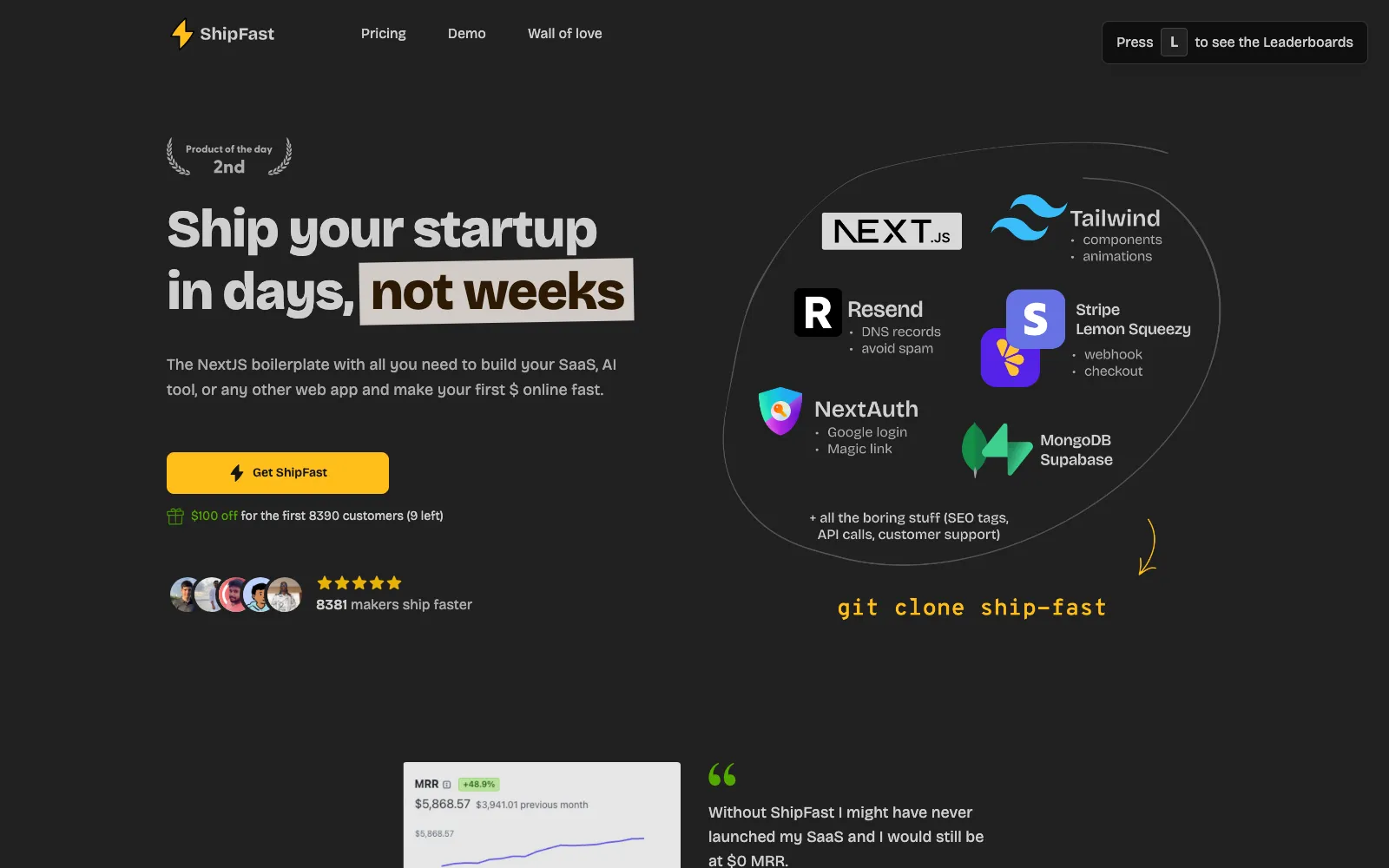
ShipFast is a Next.js SaaS boilerplate built for exactly this moment: a solo founder who wants to launch, not configure. It ships with authentication, Stripe payments, a database layer, transactional email, SEO, and a landing page already wired together, so the unglamorous plumbing every SaaS needs is done before you write a line of product code. Drop your AI feature, powered by the AI SDK and Claude, into a codebase that can already sign users up and take their money.
It is a one-time purchase with lifetime updates rather than a subscription, which keeps costs predictable for a bootstrapper. ShipFast is deliberately minimal and opinionated, great for a simple single-tenant B2C app, less so if you need heavy team/RBAC features (where a heavier kit like Makerkit fits better). For most first AI products, its speed-to-launch is the whole point: you can be live and charging in a weekend.
Best for:Solo founders who want auth, billing, and a landing page done so they can ship this weekend.
Pros
Auth, Stripe billing, DB, and email pre-integrated
One-time payment with lifetime updates, no subscription
Small, readable Next.js codebase you can move fast in
Pairs cleanly with the AI SDK for the AI feature
Cons
Minimal by design, light on team/RBAC and multi-tenant features
Opinionated stack you inherit (Next.js plus its choices)
AI scaffolding is basic; you wire the model layer yourself
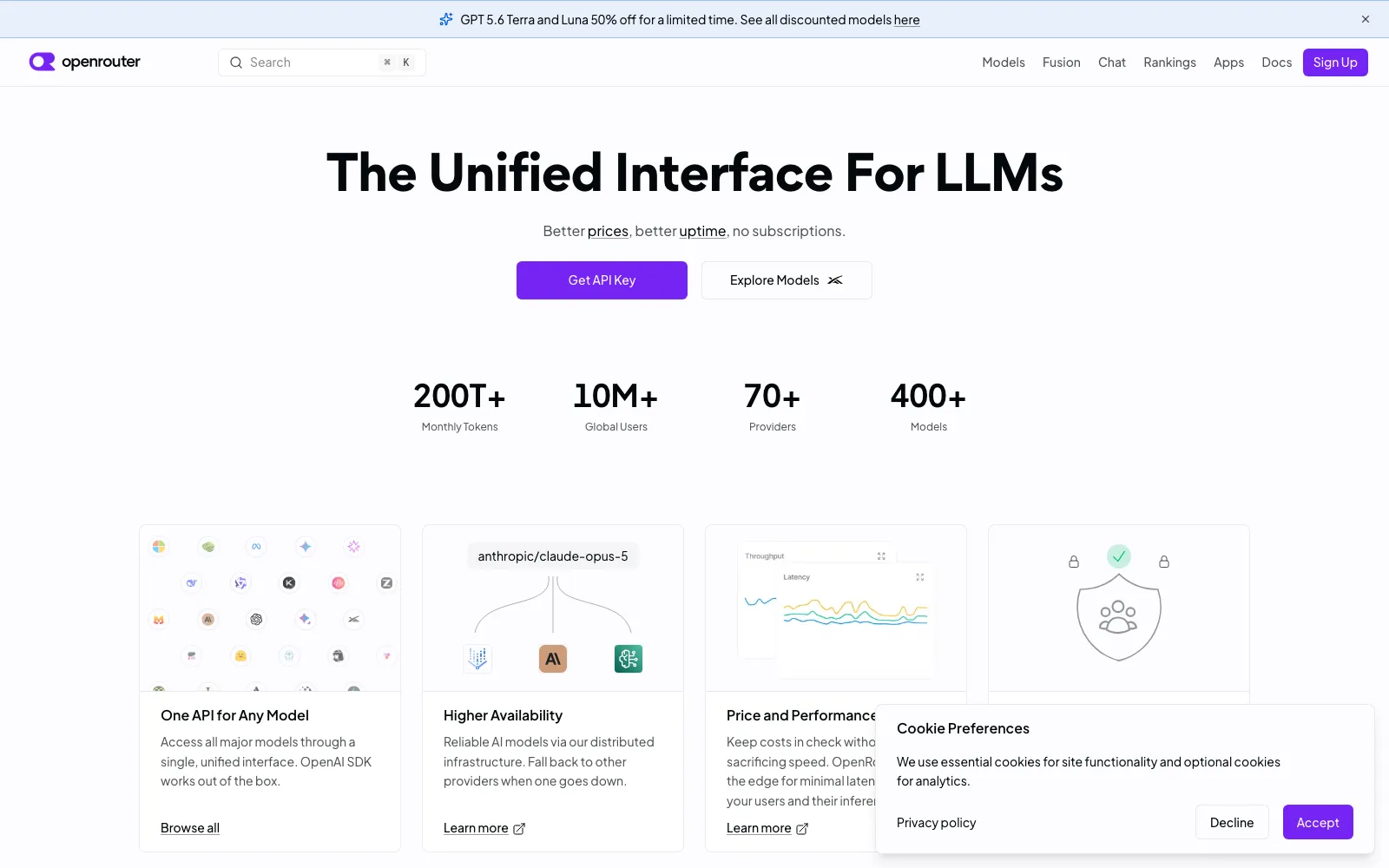
OpenRouter is a single API in front of 200+ models from Anthropic, OpenAI, Google, Meta, DeepSeek, and many open-source providers. Instead of managing separate accounts, keys, and billing for each lab, you top up one balance and route requests to whatever model fits the task, cheapest for bulk classification, Claude for the hard reasoning, with automatic failover if a provider is down. For a small team, that operational simplicity and resilience is worth a lot.
You pay the upstream provider's list price plus a roughly 5.5% fee on credit top-ups (BYOK usage is billed slightly differently), so it costs marginally more than going direct but buys you a standardized response format, one bill, and instant access to new models the day they launch. It works out of the box with the Vercel AI SDK, making it easy to A/B different models or add a fallback behind your primary Claude calls without changing your code.
Best for:Teams who want to compare, route, and fail over across many models from one integration.
Pros
200+ models from every major lab behind one API key
Automatic failover and standardized responses
One balance and bill instead of many provider accounts
Instant access to new models; free tiers for testing
Cons
~5.5% credit fee on top of provider list price
Adds a third party between you and the model provider
Less control over provider-specific features and quotas
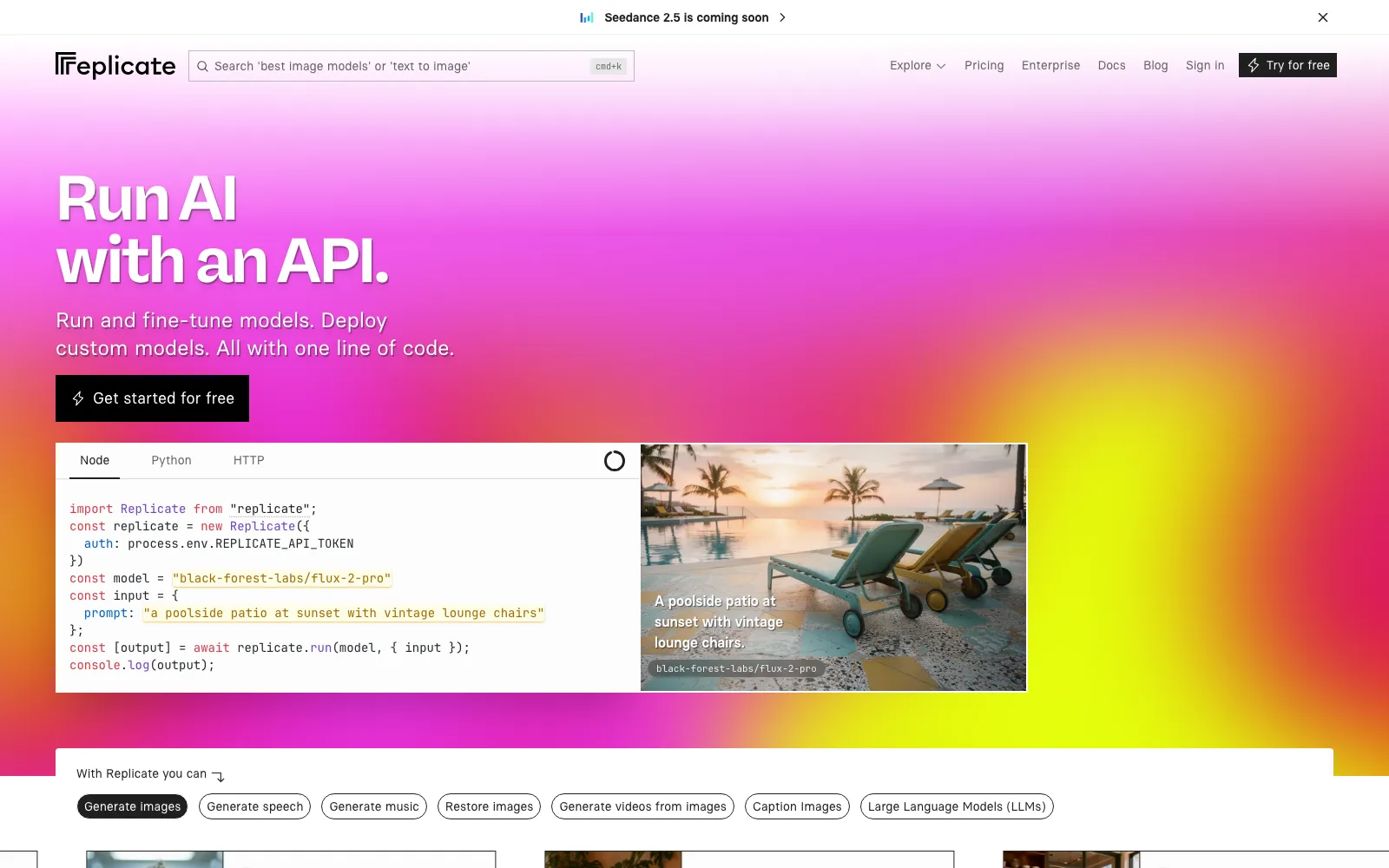
When your product needs more than a text LLM, image generation, speech, video, embeddings, or a fine-tuned open model, Replicate lets you run it behind a simple API without owning any GPUs. You can call thousands of community-published models (Stable Diffusion, Flux, Whisper, Llama, and more) or push your own with Cog and get a scalable HTTP endpoint. It handles the containerization, GPU provisioning, and autoscaling so you do not touch infrastructure.
Billing is usage-based, you pay by the second of GPU compute (or per run for some models), and it scales to zero when idle, so an early-stage product with spiky traffic is not paying for idle hardware. Use it as the specialist inference layer alongside your Claude-powered text features: Claude for reasoning and generation, Replicate for the image/audio/custom-model pieces the big APIs do not cover.
Best for:Products needing image, audio, or custom/open models without managing GPU infrastructure.
Pros
Thousands of open models callable via one API
Deploy your own or fine-tuned models with Cog
Pay-per-second compute; scales to zero when idle
No GPU or infra management required
Cons
GPU compute can get expensive under sustained load
Cold starts add latency on infrequently used models
Not for standard text-LLM chat (use Claude/OpenRouter)
Less predictable cost than fixed per-token pricing
Almost certainly not. In 2026 the fastest and most reliable path is to build on top of frontier APIs like Claude and open models via Replicate. Training or fine-tuning your own model is expensive, slow, and rarely the differentiator early on, your product, data, and distribution are. Start with a hosted API, and only consider fine-tuning once you have real usage data and a specific quality gap to close.
Which LLM API should I use?+
For most AI startups, Anthropic's Claude API is an excellent default, it is a leading model for coding, agents, and long-context reasoning, with simple pay-as-you-go pricing and cost levers like prompt caching and batch processing. Build against it first, and use a gateway like OpenRouter or the Vercel AI SDK's model-agnostic layer so you can benchmark alternatives and add fallbacks without rewriting your code.
How much does it cost to start?+
Less than you think. The Vercel AI SDK is free and open source, model APIs are pay-per-token with no minimums (Claude Sonnet is roughly $3/$15 per million tokens, with cheaper Haiku and batch options), and a boilerplate like ShipFast is a one-time ~$199–$249. Many founders launch a first version for under a few hundred dollars plus usage-based model costs that scale only as your users grow (verify current prices).
Do I need ML expertise?+
No. Building an AI SaaS or wrapper product in 2026 is primarily web development plus good prompt and product design. If you can build a web app with Next.js and call an API, you can build an AI product. Frameworks like the Vercel AI SDK handle streaming, tool calling, and agent loops for you, so you focus on solving the user's problem rather than machine learning internals.
What is the fastest way to launch an AI product?+
Start from a SaaS boilerplate (ShipFast) so auth, billing, and a landing page are already done; add your AI feature with the Vercel AI SDK calling the Claude API; deploy; and get it in front of real users the same week. Keep the scope to one narrow, valuable use case. You can add multi-model routing (OpenRouter) or specialist models (Replicate) later, once users tell you what they actually need.
The verdict
For most founders starting an AI product in 2026, the winning stack is the Vercel AI SDK to build with, the Claude API as your primary model, and a boilerplate like ShipFast to skip weeks of auth and billing setup, add OpenRouter for multi-model routing and Replicate for image, audio, or custom models as you grow. The Vercel AI SDK earns the top spot because it is free, model-agnostic, and the fastest way to turn a model into a real feature; Claude is the model most quality-sensitive products should reach for first. Pick a narrow problem, ship in a weekend, and let paying users guide what you build next.
We are the editorial team behind Alternative.tools, an independent platform that helps you find the best tools and their alternatives. We use AI to research and summarize newly launched websites, tools, and products, focusing on what each one does, who it's for, and which popular tools it can replace, so you can pick the right alternative faster, without the marketing spin.