Alternative.tools
CategoryGuidesHow-toBlogPricing
Submit your Website
Alternative.tools
Submit
Alternative.tools

Alternative.tools is an independent platform dedicated to unbiased reviews of newly launched websites, tools, and products — analyzing everything from their features to their full potential. Our goal is to be objective, simple, and your first stop when researching a new tool to grow your business, helping you discover great alternatives to the ones you already use.

Helping founders and makers get discovered.

Product
  • Submit Website
  • Pricing
  • Categories
Guides
  • All Guides
  • How-to Playbooks
  • Best for…
  • Directory Submission
  • AI / LLM APIs
  • Reddit Marketing
  • Stripe Alternatives
  • SEO Tools
Resources
  • About Us
  • Submission Guidelines
  • Glossary
  • Blog
  • SaaS Payments
  • Google Graveyard
  • Sitemap
  • LLMs.txt
Legal
  • Privacy Policy
  • Terms of Service
  • Cookie Policy
  • Contact
© 2026 Alternative.tools

On this page

  • Overview
  • Watch
  • How to choose
  • Comparison
  • Feature comparison
  • Ghost
  • WordPress
  • Substack
  • Beehiiv
  • Framer
  • FAQ
  • The verdict
Summarize with AI
Web Review

Web Review

Ad

The website review directory that helps you rank on Google, ChatGPT, Claude, Gemini & Perplexity with dofollow backlinks and AI reviews.

HomeHow-toHow to Start a Blog in 2026

How to Start a Blog in 2026

A step-by-step playbook for creators and founders, plus the 5 best blogging platforms compared and ranked on merit.

Updated August 2026
Share:

On this page

  • Overview
  • Watch
  • How to choose
  • Comparison
  • Feature comparison
  • Ghost
  • WordPress
  • Substack
  • Beehiiv
  • Framer
  • FAQ
  • The verdict
Summarize with AI
Web Review

Web Review

Ad

The website review directory that helps you rank on Google, ChatGPT, Claude, Gemini & Perplexity with dofollow backlinks and AI reviews.

Key takeaways

  • 1. GhostBest all-round

    Creators and founders who want a fast, ownable blog with built-in newsletter and memberships and no revenue cut.

    Visit Ghost
  • 2. WordPressMost flexible

    Bloggers who want total control, the deepest plugin ecosystem, and granular SEO on a self-hosted stack.

  • 3. SubstackEasiest paid newsletter

    Writers who want to launch a paid newsletter with zero upfront cost and tap a built-in discovery network.

  • 4. BeehiivBest for newsletter growth

    Email-first creators who want serious growth tooling, an ad network, and to keep 100% of subscription revenue.

  • 5. FramerBest no-code design

    Design-conscious founders who want a visually stunning blog and marketing site with zero code.

  • Overview

    Starting a blog in 2026 comes down to five moves: pick a focused niche and the audience you actually want to reach, choose a platform that fits how you'll publish and earn, lock in a custom domain and a clean design you own, publish consistently with SEO fundamentals baked in (keyword-led topics, fast pages, internal links), and then layer on monetization through memberships, paid newsletters, sponsorships, or products. Get those in order and the blog compounds; skip the niche and platform decisions and you'll be rebuilding in a year.

    The platform choice is the one that's hardest to reverse, so it's worth getting right up front. Below we rank the five strongest options for 2026, covering a self-hosted/pro route, newsletter-first tools, a no-code website builder, and free-to-start picks, so you can match the platform to your goals rather than the other way around.

    Watch

    How to Start a Blog in 2026 — a complete beginner's walkthrough.

    How to choose

    Before you pick, weigh these against your own situation — the right choice depends on your stage, budget, and goals.

    • Content ownership — Pick a platform that lets you export your posts and use a custom domain so you keep your audience if you ever migrate.

    • SEO control — Favor tools that expose meta tags, clean URLs, sitemaps, and fast page loads, since organic search is most blogs' main growth channel.

    • Monetization options — Check whether the platform allows ads, memberships, newsletters, or affiliate links without punitive fees or restrictions.

    • Ease vs flexibility — Weigh hosted simplicity against self-hosted control, choosing based on whether you would rather write or tinker with configuration.

    • Total cost over time — Add up hosting, themes, plugins, and transaction fees, because a cheap starter tier often gets expensive as traffic and features grow.

    Comparison at a glance

    PlatformBest forPricingTypeStandout
    GhostCreators who want to own their audience and monetize with 0% feesSelf-host free; Ghost(Pro) from ~$18/mo (verify)Self-hosted / managed proNative memberships + newsletter, takes 0% of subscription revenue
    WordPressBloggers who want maximum control, plugins, and SEO depthSoftware free; hosting ~$3–10/mo + domain ~$12/yr (verify)Self-hosted (or hosted .com)Vast plugin/theme ecosystem and best-in-class SEO control
    SubstackWriters who want to start free and monetize a newsletter fastFree to start; 10% cut of paid subscriptions + Stripe fees (verify)Newsletter-style, hostedBuilt-in discovery network and one-click paid subscriptions
    BeehiivNewsletter creators who want growth tools and 0% revenue cutFree to 2,500 subs; Scale ~$49/mo, Max ~$109/mo (verify)Newsletter-style, hostedGrowth engine (referrals, Boosts) plus built-in ad network
    FramerDesign-led founders who want a beautiful blog with no codeFree tier; Basic ~$10/mo, Pro (CMS/blog) ~$30/mo (verify)No-code website builderDesign-tool-grade visual control with a built-in CMS

    Pricing and features change often — verify current details on each provider's site. Last checked August 2026.

    Feature comparison

    FeatureGhostWordPressSubstackBeehiivFramer
    Free tierPartial
    Custom domainPartial
    Own your content/dataPartialPartialPartial
    Built-in newsletterPartial
    Monetization built inPartial
    Strong SEO controlPartialPartial

    "Partial" means available via add-on, in beta, or more limited than competitors.

    Ghost

    Best all-round
    Visit Ghost

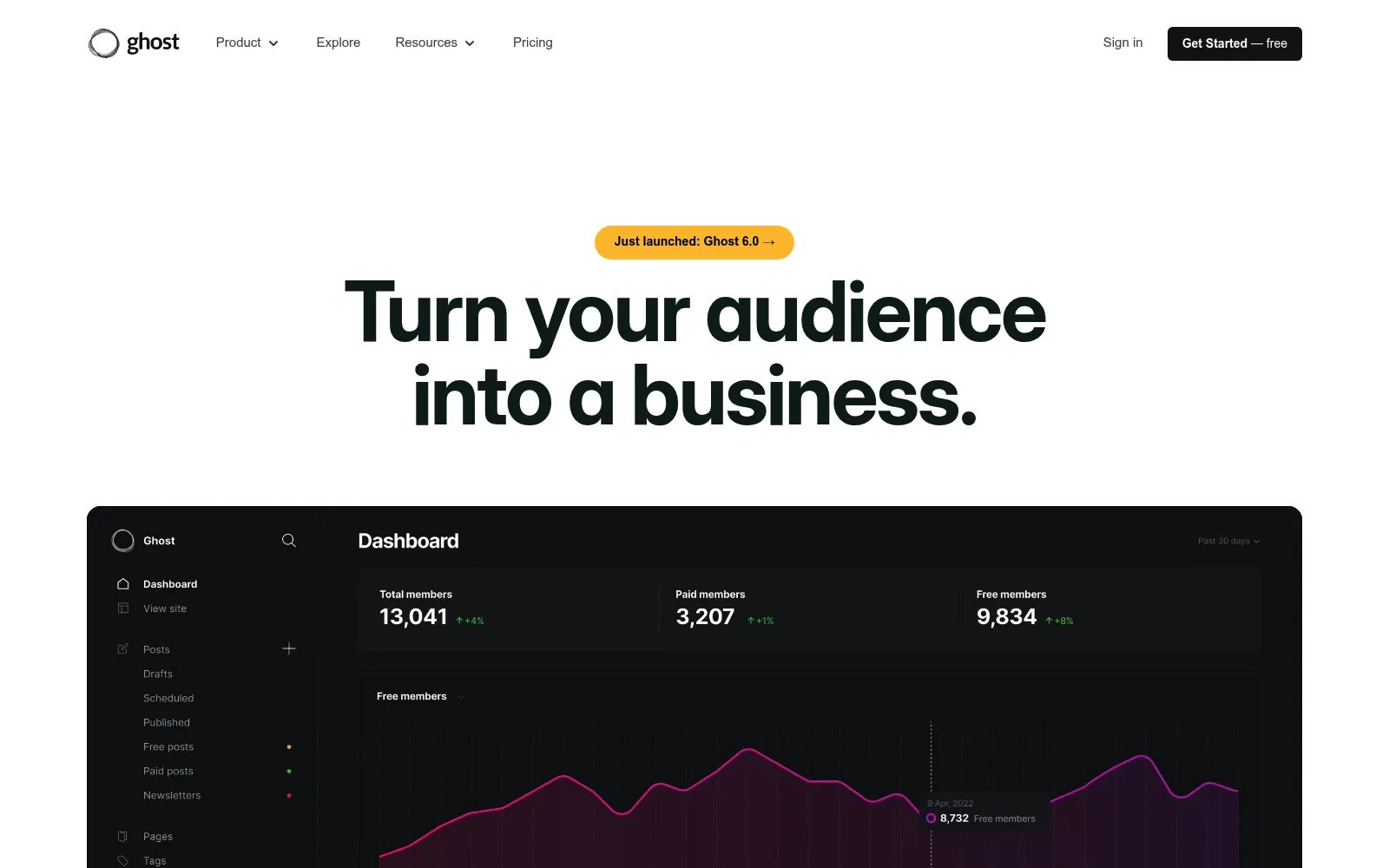
    Ghost is a focused, open-source publishing platform built specifically for professional bloggers and independent creators, not a general-purpose CMS bolted onto a page builder. You can publish a post to the web and send it as an email newsletter in one action, gate content behind free or paid tiers, and run the whole membership business through Stripe. Crucially, Ghost charges a 0% platform fee on subscription revenue on every plan, so beyond Stripe's processing you keep what your audience pays.

    You have two routes: self-host the software for free if you're comfortable managing a server, or use managed Ghost(Pro) hosting from roughly $18/mo for the Starter tier, scaling to Publisher (~$29/mo) and Business (~$199/mo) as your member count grows (verify). Either way you own your content, data, and domain, and Ghost's clean markup and speed make it strong for SEO. The trade-off is fewer plugins and less hand-holding than WordPress, and the Starter plan caps members.

    Best for: Creators and founders who want a fast, ownable blog with built-in newsletter and memberships and no revenue cut.

    Pros

    • 0% platform fee on membership and subscription revenue
    • Native newsletter + paid memberships built in, no plugins
    • Own your content, data, and domain (self-host or export anytime)
    • Fast, clean, SEO-friendly output out of the box

    Cons

    • Smaller theme/plugin ecosystem than WordPress
    • Self-hosting means you manage servers, updates, and backups
    • Starter plan caps members and hides custom themes
    • Less suited to complex non-blog sites (stores, forums)
    Visit Ghost

    WordPress

    Most flexible
    Visit WordPress

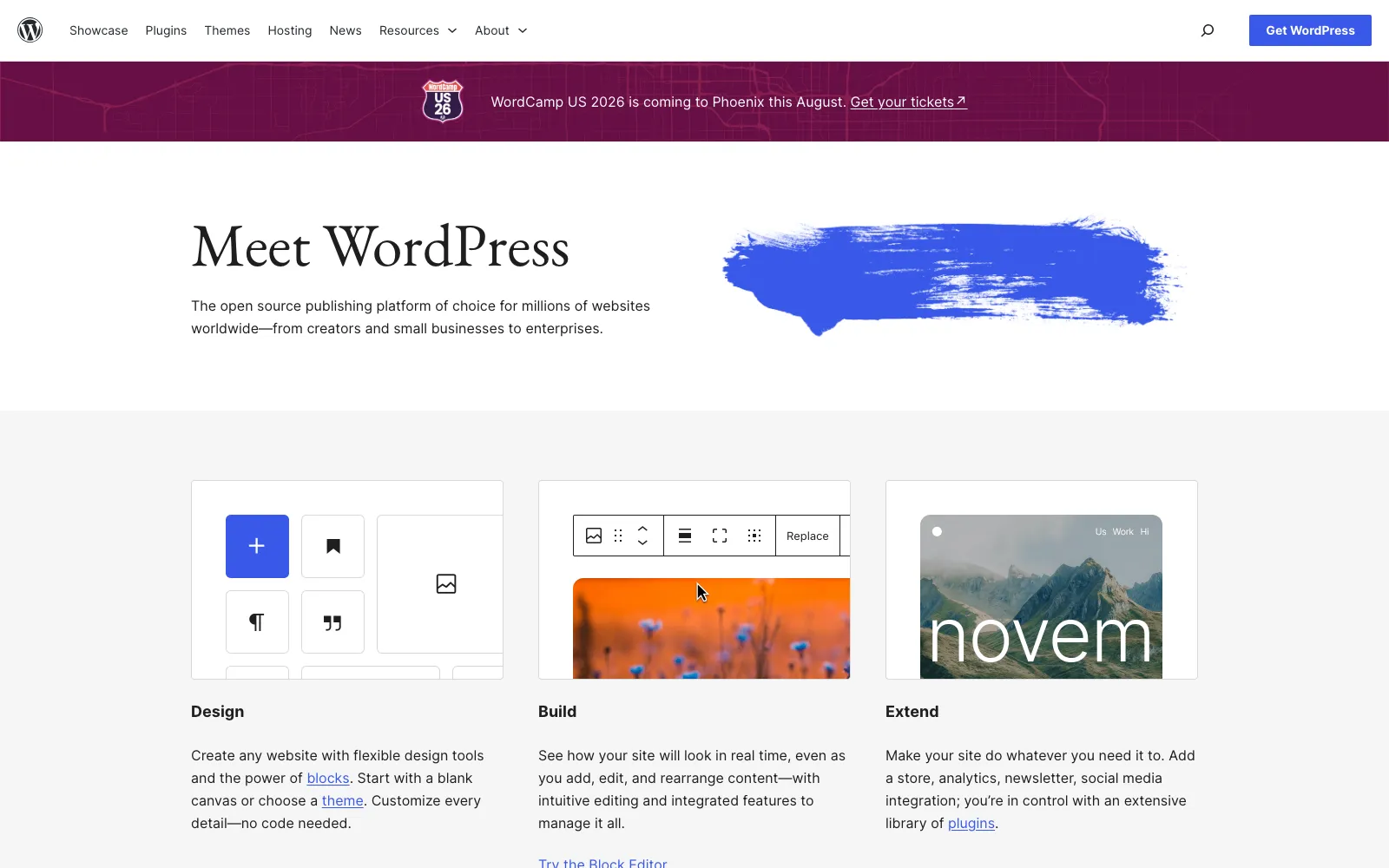
    Self-hosted WordPress (the open-source software from WordPress.org) still powers a huge share of the web because nothing else matches its flexibility. Between plugins like Yoast or Rank Math, thousands of themes, and full access to your files and database, you can shape a blog into almost anything and tune every SEO signal down to the schema. You fully own your content and can move hosts whenever you like.

    The software is free, but a real site means paying for hosting (shared plans run ~$3–10/mo, managed WordPress ~$20–50/mo) plus a domain (~$12–20/yr) (verify). If you'd rather not manage anything, WordPress.com offers hosted plans from free up to ~$70/mo, though cheaper tiers block custom plugins, which are the whole point for serious bloggers. WordPress rewards a bit of technical willingness with unmatched extensibility; the cost is that you assemble and maintain the stack yourself.

    Best for: Bloggers who want total control, the deepest plugin ecosystem, and granular SEO on a self-hosted stack.

    Pros

    • Unmatched plugin and theme ecosystem for any feature
    • Best-in-class SEO control via Yoast/Rank Math and full markup access
    • Fully own your content, data, and hosting choice
    • Software is free; can start cheap and scale indefinitely

    Cons

    • You assemble and maintain hosting, security, and backups
    • Steeper learning curve than hosted all-in-one platforms
    • Plugin sprawl can hurt speed and create conflicts
    • Monetization/newsletter need third-party plugins or services
    Visit WordPress

    Substack

    Easiest paid newsletter
    Visit Substack

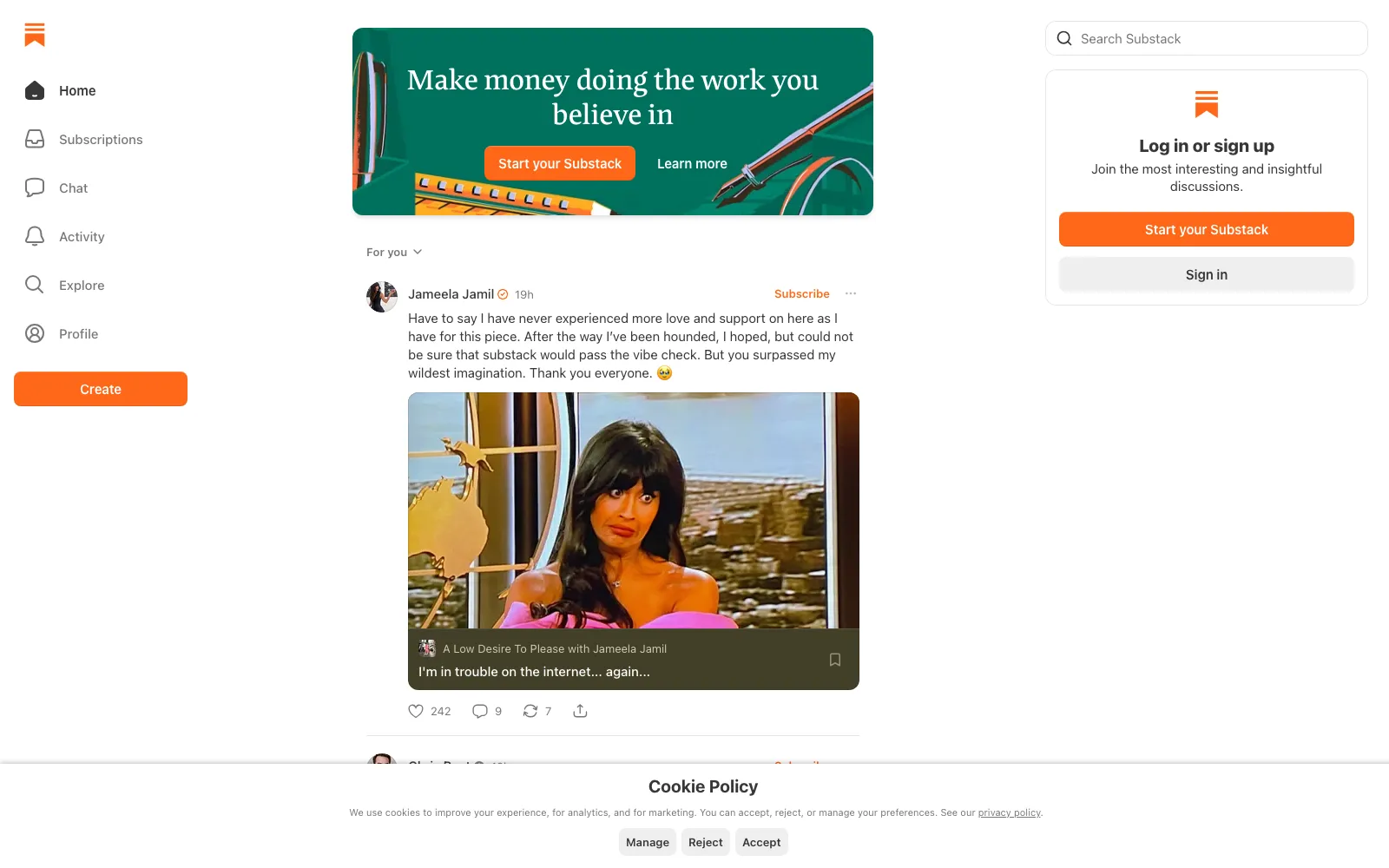
    Substack is the fastest way to go from zero to a publishing, growing, and earning newsletter-blog. There's no monthly fee and no setup: you write, readers subscribe by email, and turning on paid subscriptions takes a few clicks. Its recommendation network, notes, and app actively help you find new readers, which is a genuine growth advantage most standalone platforms can't offer.

    The catch is the business model. Substack takes 10% of your paid-subscription revenue on top of Stripe's ~2.9% + $0.30 (verify), so as you scale, that cut can dwarf a flat monthly fee elsewhere. You also get limited design and SEO control and don't fully own the platform, though you can export your subscriber list and posts. Great as a low-friction starting point; many creators migrate to Ghost or Beehiiv once revenue makes the percentage sting.

    Best for: Writers who want to launch a paid newsletter with zero upfront cost and tap a built-in discovery network.

    Pros

    • Free to start with no monthly fee, pay only when you earn
    • Built-in recommendation network drives real subscriber growth
    • One-click paid subscriptions with minimal setup
    • Export your posts and subscriber list at any time

    Cons

    • Takes 10% of paid revenue, costly at scale (verify)
    • Limited design, layout, and SEO control
    • You don't own the platform or its discovery algorithm
    • Weak fit if you want a full website rather than a newsletter
    Visit Substack

    Beehiiv

    Best for newsletter growth
    Visit Beehiiv

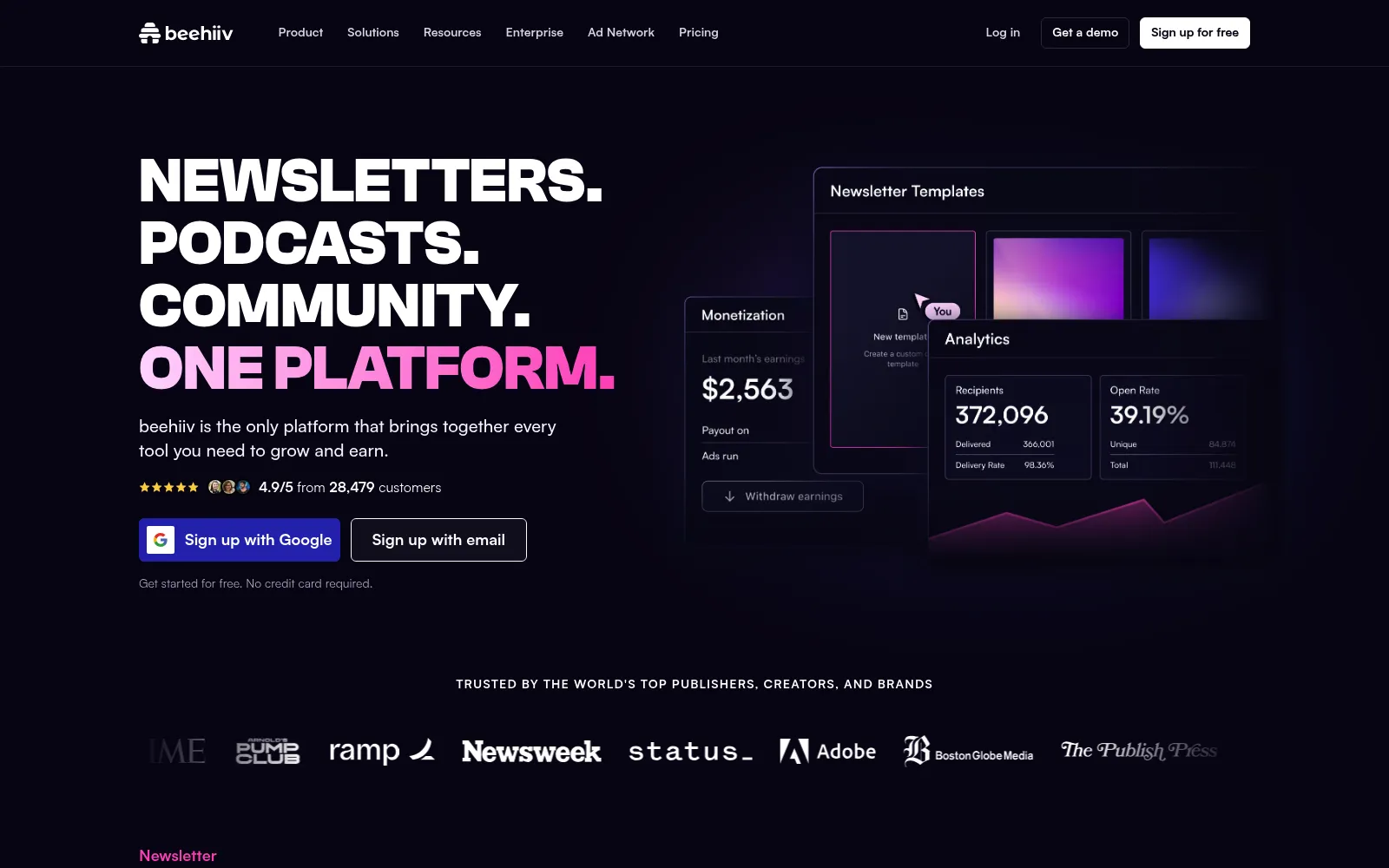
    Beehiiv was built by ex-Morning Brew operators to do one thing well: grow and monetize newsletters. The free Launch plan covers up to 2,500 subscribers with unlimited sends, and paid tiers add automations, paid subscriptions, and a purpose-built growth engine, referral programs, recommendations, and Boosts, that make audience building a first-class feature rather than an afterthought.

    On monetization, Beehiiv takes 0% of your paid-subscription revenue and runs an ad network that matches sponsors to your newsletter, giving you a second income stream without cold outreach. Paid plans run from roughly $49/mo for Scale to $109/mo for Max, with annual billing cheaper (verify). It's more newsletter than full website and its SEO/blog surface is lighter than Ghost or WordPress, but for a monetized email-first audience it's one of the strongest options going.

    Best for: Email-first creators who want serious growth tooling, an ad network, and to keep 100% of subscription revenue.

    Pros

    • Generous free tier up to 2,500 subscribers with unlimited sends
    • 0% platform cut on paid subscriptions (verify)
    • Built-in ad network and referral/Boost growth engine
    • Strong analytics, segmentation, and automations

    Cons

    • Newsletter-first; weaker as a full website/blog
    • Lighter SEO and design control than Ghost or WordPress
    • Best growth and monetization features need paid plans
    • Paid tiers get pricey as subscriber count climbs
    Visit Beehiiv

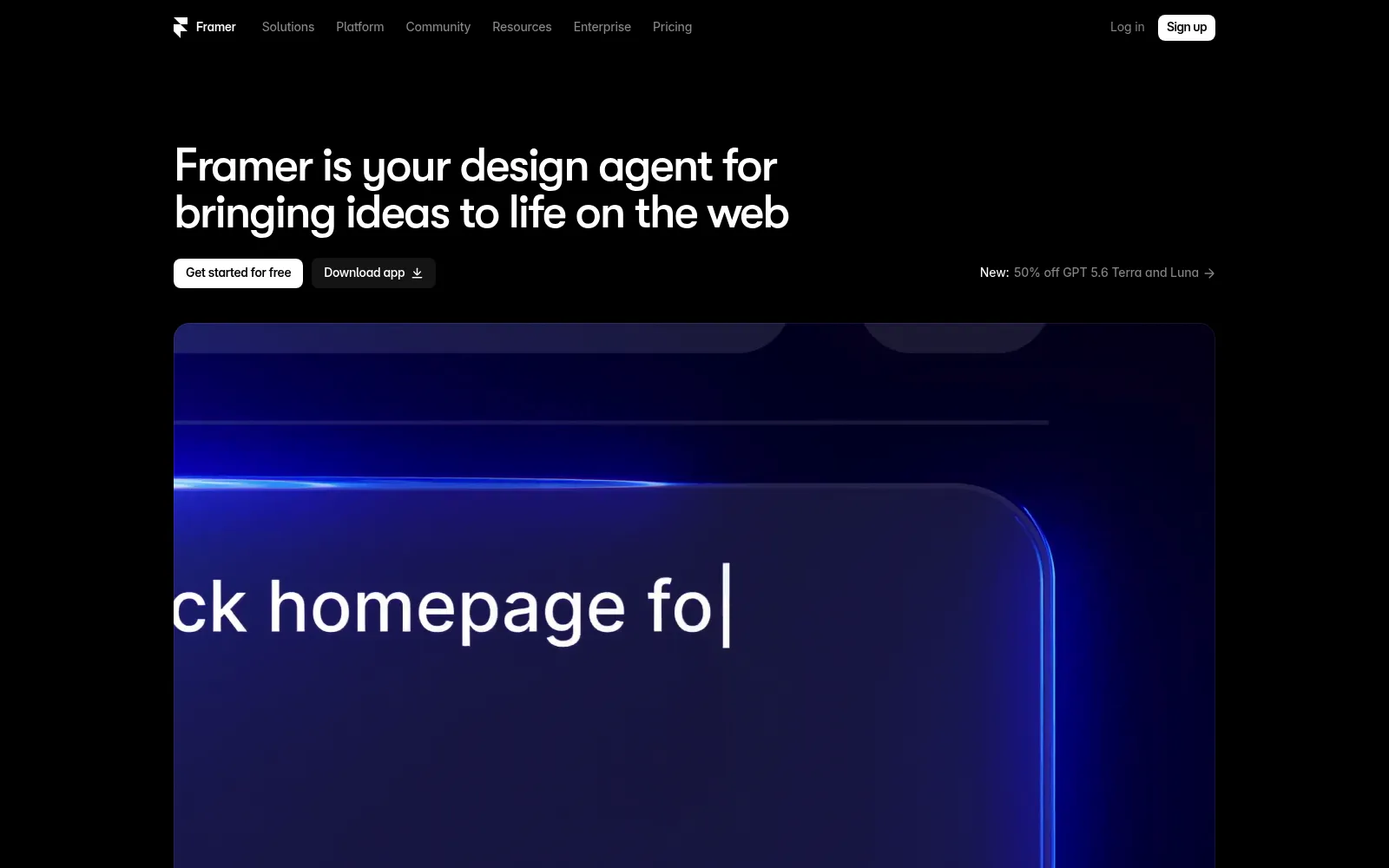
    Framer

    Best no-code design
    Visit Framer

    Framer is a no-code website builder that started life as a design tool, and it shows: you get pixel-level visual control, polished animations, and templates that look custom-built, all without touching code. For founders who want their blog to live inside a genuinely beautiful marketing site, and who care more about design than about plugins, it's the standout pick in this list.

    The free plan is usable for a live site on a framer.website subdomain, but a real blog needs the Pro plan (~$30/mo) for the CMS collections that power blog posts, staging, and custom domains; Basic (~$10/mo) adds a custom domain but not the CMS (verify). Watch for add-on costs like extra editor seats. Framer has no native newsletter or membership billing, so monetization means bolting on external tools, but for design-first content sites it's hard to beat.

    Best for: Design-conscious founders who want a visually stunning blog and marketing site with zero code.

    Pros

    • Design-tool-grade visual control and animations, no code
    • Built-in CMS for blogs plus polished templates
    • Genuinely usable free tier to launch a live site
    • Custom domain and fast, modern hosting included on paid plans

    Cons

    • No native newsletter or membership/subscription billing
    • Blog CMS requires the Pro plan (~$30/mo) (verify)
    • Add-ons (extra editors, locales) inflate the real cost
    • Less content/SEO tooling depth than WordPress or Ghost
    Visit Framer

    Frequently asked questions

    How much does it cost to start a blog in 2026?+

    You can start free on Substack, Beehiiv (to 2,500 subscribers), or Framer's free tier. A professional setup typically runs $12–20/year for a domain plus either a hosted plan (Ghost from ~$18/mo, WordPress.com from free to ~$70/mo, Framer Pro ~$30/mo) or self-hosted WordPress on ~$3–10/mo shared hosting. Newsletter platforms like Substack instead take a percentage of your paid revenue rather than a flat fee (verify).

    Which blogging platform is best?+

    For most creators and founders in 2026, Ghost is the best all-round choice: you own your content, get a native newsletter and paid memberships, and keep 100% of subscription revenue. WordPress wins on flexibility and SEO depth, Substack and Beehiiv are best for newsletter-first audiences, and Framer is best if design matters most. The right pick depends on whether you prioritize ownership, growth, monetization, or design.

    Can you make money blogging in 2026?+

    Yes. The proven routes are paid memberships and subscriptions (Ghost and Beehiiv take 0%, Substack takes 10%), newsletter sponsorships and ad networks (Beehiiv has one built in), affiliate content, and selling your own products or courses. The key is choosing a platform whose monetization model keeps more of your revenue as you scale, which is why creators often move off percentage-fee platforms once they cross a few thousand dollars a month.

    Do I need my own domain?+

    For anything you want to grow into a real audience and business, yes. A custom domain (about $12–20/year) makes you look professional, protects your SEO and brand if you ever switch platforms, and means readers find you at your address rather than a subdomain. All five platforms here support custom domains, though on Framer and some WordPress.com/Substack tiers it requires a paid plan (verify).

    WordPress vs Ghost vs Substack, which should I choose?+

    Choose WordPress if you want maximum flexibility, plugins, and SEO control and don't mind managing the stack. Choose Ghost if you want a fast, ownable blog with a built-in newsletter and memberships and a 0% revenue cut. Choose Substack if you want the simplest possible start, a free launch, and a built-in discovery network for your newsletter, accepting a 10% cut and limited design control in exchange (verify).


    The verdict

    For creators and founders who want a blog that can both grow an audience and earn, Ghost is the best all-round platform in 2026: it combines ownership, a native newsletter, paid memberships, and a 0% revenue cut in one fast, SEO-friendly package. Pick WordPress if you want maximum flexibility and control, Substack or Beehiiv if you're newsletter-first (Beehiiv for growth and 0% fees, Substack for the easiest free start and built-in discovery), and Framer if design is your priority. Match the platform to your goals and you'll rarely need to migrate.

    Related guides

    Guide · DirectoriesBest Directory Submission Services in 2026Guide · SaaSHow to Start a SaaS in 2026Guide · AIHow to Start an AI Startup in 2026Guide · E-commerceHow to Start an Online Store in 2026
    Alternative.tools

    Alternative.tools review team

    We are the editorial team behind Alternative.tools, an independent platform for unbiased reviews of newly launched websites, tools, and products. We test tools hands-on, track pricing and features as they change, and publish practical comparisons and how-to playbooks so you can choose the right tool faster, without the marketing spin.

    About usAll guidesHow-to playbooks

    Sources — official pricing/docs:

    GhostWordPressSubstackBeehiivFramer

    Building a SaaS? Submit it to the directory to get discovered.