Alternative.tools
CategoryGuidesHow-toBlogPricing
Submit your Website
Alternative.tools
Submit
Alternative.tools

Alternative.tools is an independent platform dedicated to unbiased reviews of newly launched websites, tools, and products — analyzing everything from their features to their full potential. Our goal is to be objective, simple, and your first stop when researching a new tool to grow your business, helping you discover great alternatives to the ones you already use.

Helping founders and makers get discovered.

Product
  • Submit Website
  • Pricing
  • Categories
Guides
  • All Guides
  • How-to Playbooks
  • Best for…
  • Directory Submission
  • AI / LLM APIs
  • Reddit Marketing
  • Stripe Alternatives
  • SEO Tools
Resources
  • About Us
  • Submission Guidelines
  • Glossary
  • Blog
  • SaaS Payments
  • Google Graveyard
  • Sitemap
  • LLMs.txt
Legal
  • Privacy Policy
  • Terms of Service
  • Cookie Policy
  • Contact
© 2026 Alternative.tools

On this page

  • Overview
  • Watch
  • How to choose
  • Comparison
  • Feature comparison
  • Shopify
  • WooCommerce
  • BigCommerce
  • Lemon Squeezy
  • Payhip
  • FAQ
  • The verdict
Summarize with AI
Web Review

Web Review

Ad

The website review directory that helps you rank on Google, ChatGPT, Claude, Gemini & Perplexity with dofollow backlinks and AI reviews.

HomeHow-toHow to Start an Online Store in 2026

How to Start an Online Store in 2026

The exact steps to launch, plus the 5 best platforms ranked on merit for founders and creators.

Updated August 2026
Share:

On this page

  • Overview
  • Watch
  • How to choose
  • Comparison
  • Feature comparison
  • Shopify
  • WooCommerce
  • BigCommerce
  • Lemon Squeezy
  • Payhip
  • FAQ
  • The verdict
Summarize with AI
Web Review

Web Review

Ad

The website review directory that helps you rank on Google, ChatGPT, Claude, Gemini & Perplexity with dofollow backlinks and AI reviews.

Key takeaways

  • 1. ShopifyBest all-round

    Founders who want a proven, low-hassle platform they can scale from first sale to seven figures.

    Visit Shopify
  • 2. WooCommerceMost control

    Content-driven brands and tinkerers who want maximum control and true ownership on WordPress.

  • 3. BigCommerceBest for growth

    Growing brands with larger catalogs that want rich built-in features and payment flexibility.

  • 4. Lemon SqueezyBest for digital & SaaS

    Creators and indie founders selling software, subscriptions, or digital downloads globally.

  • 5. PayhipBest free/lightweight

    First-time sellers and creators who want to launch free and embed a store into any site.

  • Overview

    Starting an online store in 2026 comes down to five practical steps: decide what to sell and who you are selling to, pick a platform that matches your product type and budget, set up your products and connect a payment processor, design a store that builds trust and converts, then launch and drive traffic through SEO, email, and social. None of these steps require code anymore, and most modern platforms let you go from zero to your first sale in a weekend.

    The single biggest decision is which platform you build on, because it shapes your fees, your control, and how much you can grow. Below we rank the five strongest options for 2026, covering a hosted all-in-one, a WordPress route, a second hosted alternative, a creator/digital-products platform that acts as merchant of record, and a lightweight embeddable option with a free plan.

    Watch

    How to Start an Online Store in 2026 — step-by-step for beginners.

    How to choose

    Before you pick, weigh these against your own situation — the right choice depends on your stage, budget, and goals.

    • Transaction fees — Compare monthly plan cost plus per-sale and payment-processing fees, since these compound directly against every order's margin.

    • Payment and shipping options — Confirm it supports the gateways, currencies, and shipping or tax tools your customers and region actually require.

    • Scalability — Check that the platform handles your expected catalog size and traffic spikes without forcing a costly replatform as you grow.

    • Customization and ownership — Weigh template flexibility and access to code or data so you can differentiate your brand and avoid vendor lock-in.

    • App and channel ecosystem — Favor platforms with solid integrations for inventory, marketing, and marketplaces like Amazon or Instagram to sell where buyers are.

    Comparison at a glance

    PlatformBest forPricingTypeStandout
    ShopifyMost founders selling physical goodsFrom $39/mo (verify)Hosted all-in-oneLargest app and theme ecosystem
    WooCommerceWordPress users wanting full controlFree plugin + hosting (verify)WordPress / self-hostedOpen-source, you own your data
    BigCommerceLarger catalogs and growing brandsFrom ~$29–39/mo (verify)Hosted all-in-oneNo platform transaction fees
    Lemon SqueezyDigital products, software, and SaaS5% + $0.50 per sale (verify)Creator / merchant of recordHandles global tax for you
    PayhipBeginners on a tight budgetFree plan, 5% fee (verify)Lightweight / embeddableFree forever plan, embed anywhere

    Pricing and features change often — verify current details on each provider's site. Last checked August 2026.

    Feature comparison

    FeatureShopifyWooCommerceBigCommerceLemon SqueezyPayhip
    Physical products
    Digital products
    Handles tax/VAT (merchant of record)Partial
    No monthly fee option
    Own your platform/code
    Built-in marketing/SEO toolsPartialPartial

    "Partial" means available via add-on, in beta, or more limited than competitors.

    Shopify

    Best all-round
    Visit Shopify

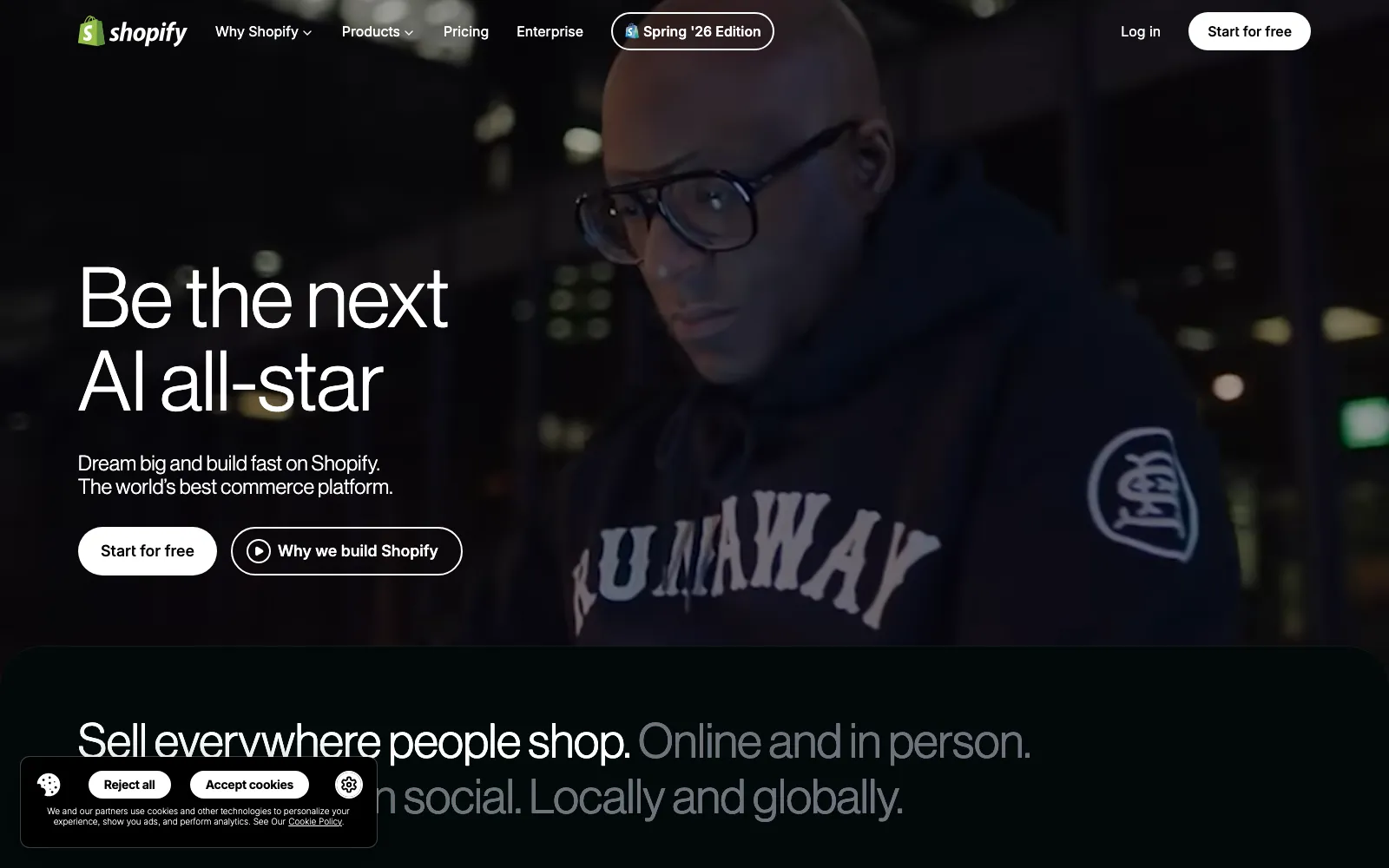
    Shopify is the default choice for most people starting a serious store because it bundles hosting, checkout, inventory, and payments into one reliable platform with almost no technical setup. The Basic plan is $39/mo (around $29/mo billed annually), and Shopify Payments charges 2.9% + 30c per online card sale with no extra platform fee.

    Its biggest advantage is scale: thousands of apps, hundreds of themes, strong POS for in-person selling, and mature tools for shipping, taxes, and marketing. The main trade-off is a 2% surcharge if you use a third-party payment gateway instead of Shopify Payments, and costs rise as you add apps.

    Best for: Founders who want a proven, low-hassle platform they can scale from first sale to seven figures.

    Pros

    • Fastest path to a professional, reliable store
    • Huge ecosystem of apps, themes, and experts
    • No extra platform fee when using Shopify Payments
    • Strong POS and multichannel selling

    Cons

    • Monthly fee before you make a sale
    • 2% surcharge on third-party payment gateways
    • App costs add up quickly at scale
    • You do not own the platform or code
    Visit Shopify

    WooCommerce

    Most control
    Visit WooCommerce

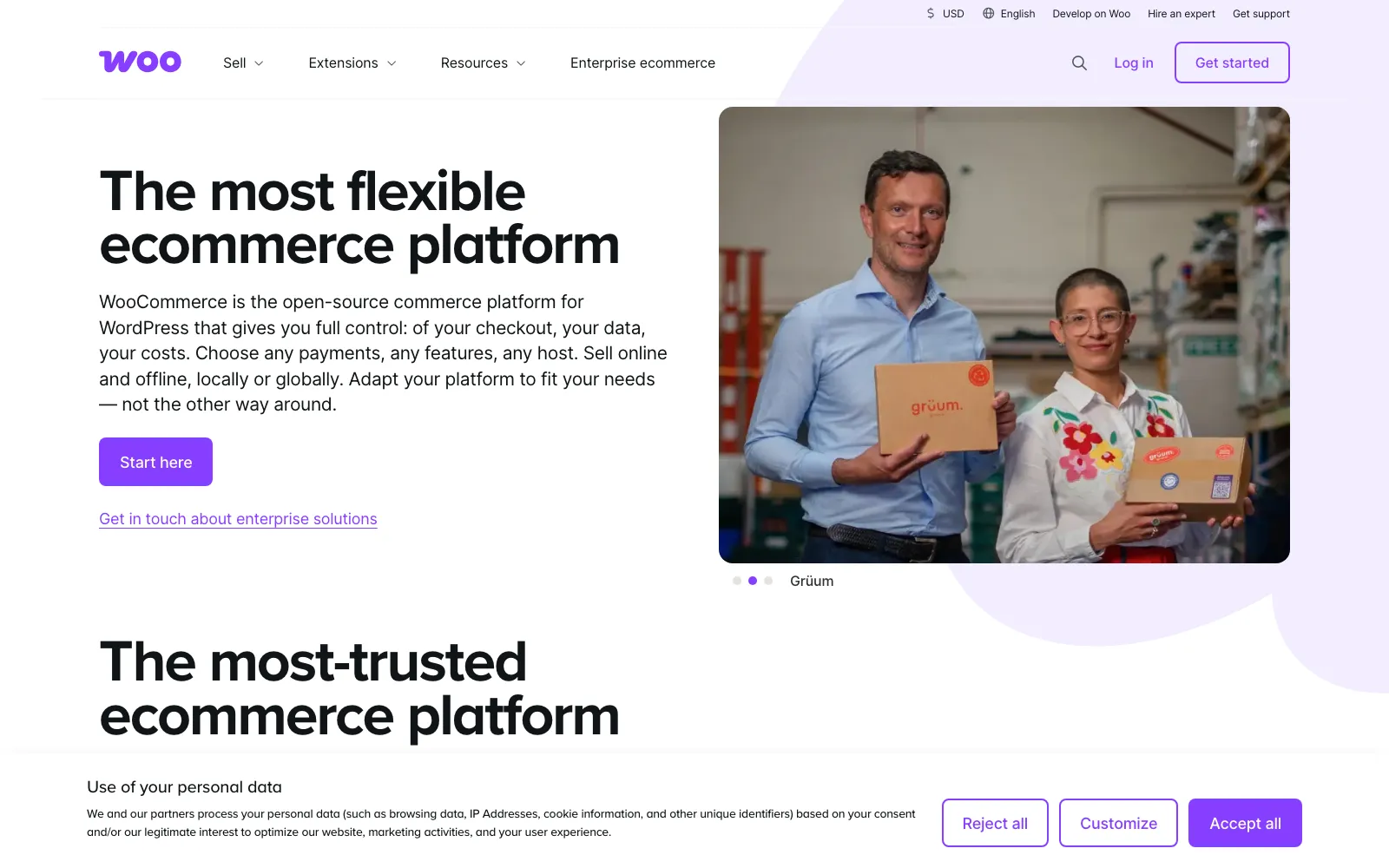
    WooCommerce is a free, open-source plugin that turns any WordPress site into a full store, so you own your data and can customize almost everything. The core plugin charges zero transaction fees; your real costs are hosting (roughly $5-30/mo) plus any premium themes, extensions, and payment processing (about 2.9% + 30c via Stripe or WooPayments).

    It is the most flexible option on this list and pairs content, blogging, and commerce in one place, which is excellent for SEO. The cost is responsibility: you handle hosting, security, updates, and plugin compatibility yourself, so it suits people comfortable with WordPress or willing to learn.

    Best for: Content-driven brands and tinkerers who want maximum control and true ownership on WordPress.

    Pros

    • Free core plugin with no revenue cut
    • Complete control and ownership of your site
    • Excellent for content and SEO on WordPress
    • Endless plugins and customization options

    Cons

    • You manage hosting, security, and updates
    • Steeper learning curve than hosted platforms
    • Costs come from plugins and hosting, not one bill
    • Plugin conflicts can cause maintenance headaches
    Visit WooCommerce

    BigCommerce

    Best for growth
    Visit BigCommerce

    BigCommerce is a hosted platform similar to Shopify but aimed at stores with bigger catalogs and more built-in features out of the box, reducing reliance on paid apps. Plans start around $29.95-$39/mo (verify), and it charges no platform transaction fees, though non-embedded payment providers can add up to 2%.

    It shines on native functionality such as advanced product options, faceted search, and multichannel selling without extra apps, and it has no bundled payment lock-in. The downsides are annual sales thresholds that push you to higher tiers, and a slightly less beginner-friendly, smaller app ecosystem than Shopify.

    Best for: Growing brands with larger catalogs that want rich built-in features and payment flexibility.

    Pros

    • No platform transaction fees on any plan
    • Rich features built in, fewer paid apps needed
    • Freedom to choose your payment processor
    • Strong multichannel and B2B capabilities

    Cons

    • Sales thresholds force plan upgrades
    • Smaller app and theme ecosystem than Shopify
    • Monthly fee before your first sale
    • Less beginner-friendly interface
    Visit BigCommerce

    Lemon Squeezy

    Best for digital & SaaS
    Visit Lemon Squeezy

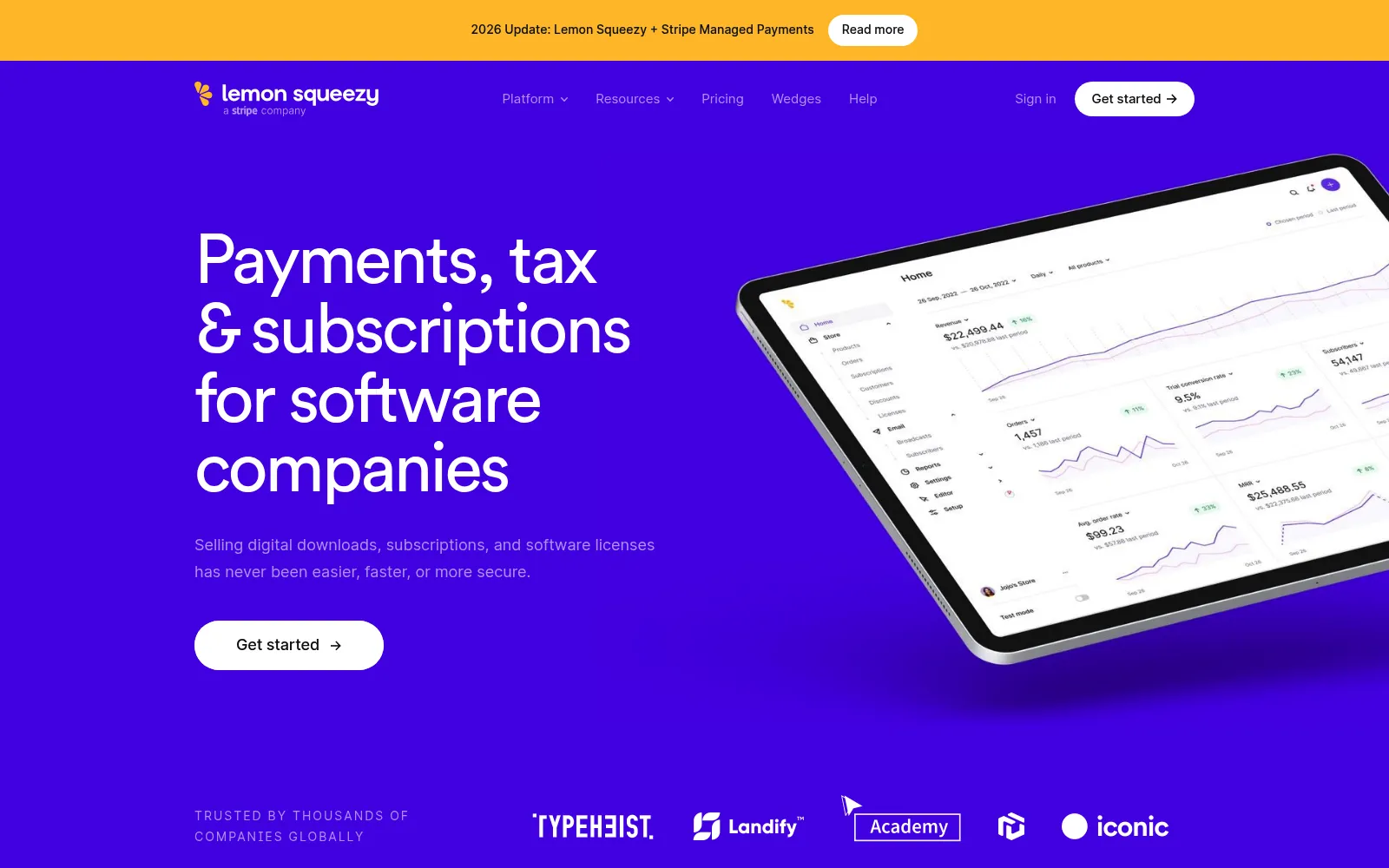
    Lemon Squeezy is built for selling digital products, software licenses, and SaaS subscriptions, and it acts as merchant of record, meaning it handles global sales tax and EU VAT compliance and remittance for you. There is no monthly fee; it takes 5% + $0.50 per sale, with small add-ons for international cards, PayPal, and subscriptions (verify).

    The merchant-of-record model is the headline: you never register for or file tax in other jurisdictions, and Lemon Squeezy absorbs chargebacks and audits as the seller of record. It is not designed for physical goods, and the effective fee is higher than raw Stripe, but the compliance it removes is worth it for many founders.

    Best for: Creators and indie founders selling software, subscriptions, or digital downloads globally.

    Pros

    • Merchant of record handles all tax/VAT
    • No monthly fee, pay only when you sell
    • Built-in subscriptions, licensing, and affiliates
    • Removes cross-border compliance burden

    Cons

    • Not suitable for physical products
    • 5% + $0.50 is higher than raw processing
    • Extra fees for international cards and PayPal
    • Less design flexibility than a full store builder
    Visit Lemon Squeezy

    Payhip

    Best free/lightweight
    Visit Payhip

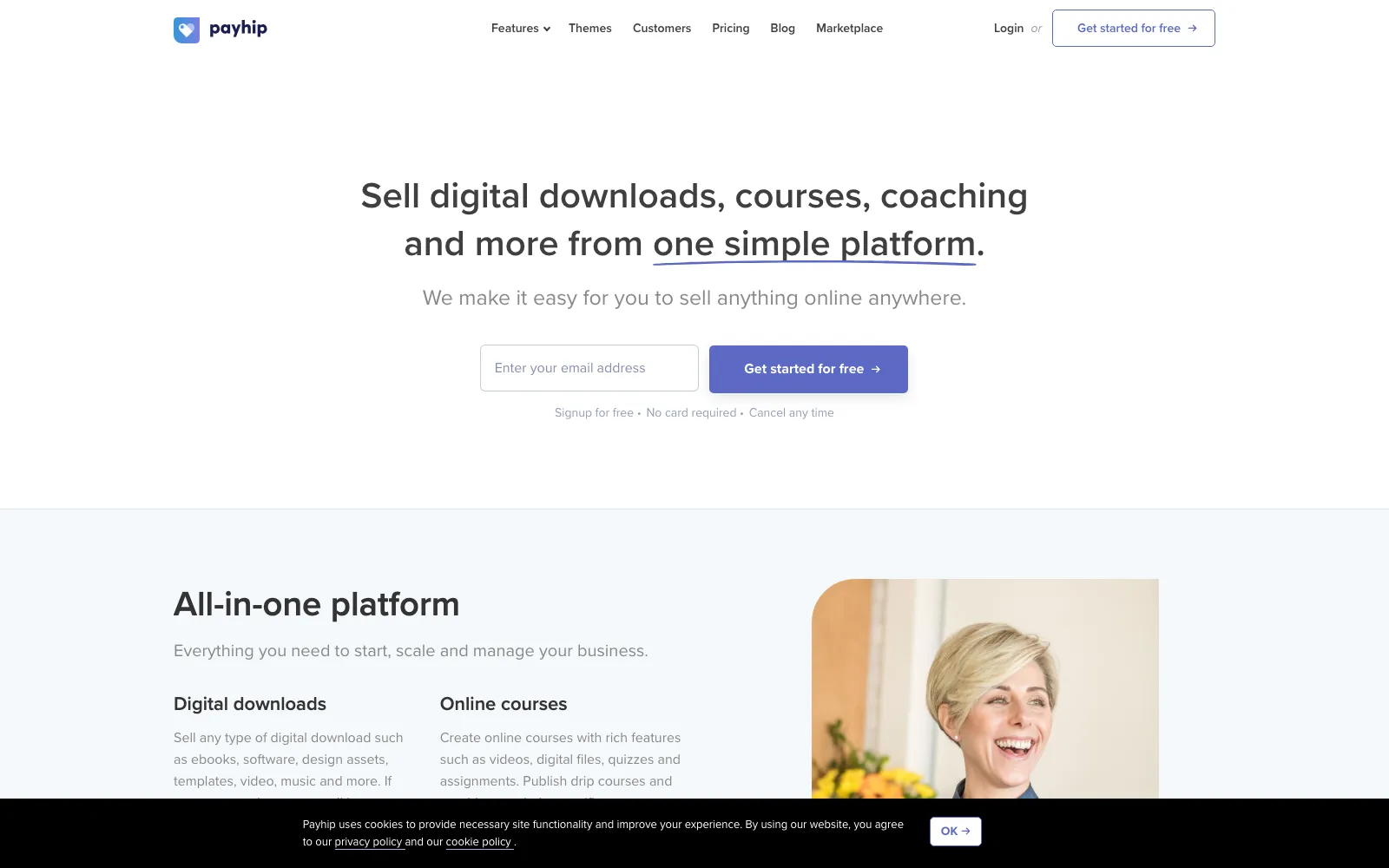
    Payhip is the easiest low-cost way to start, with a free-forever plan that charges just 5% per sale and no monthly fee, plus Plus ($29/mo, 2% fee) and Pro ($99/mo, 0% fee) tiers as you grow (verify). It sells digital downloads, memberships, courses, coaching, and physical products, and handles EU VAT on digital goods for you.

    You can use its hosted storefront or embed buy buttons and product widgets into any existing website or blog, which makes it a great lightweight bolt-on. Standard Stripe/PayPal processing fees (about 2.9% + 30c) still apply on top, and the design and scaling options are more limited than full store builders.

    Best for: First-time sellers and creators who want to launch free and embed a store into any site.

    Pros

    • Genuinely free plan with no monthly cost
    • Embeddable buttons and widgets for any site
    • Sells digital, memberships, courses, and physical
    • Handles EU VAT on digital products

    Cons

    • 5% fee on the free plan adds up
    • Payment processing fees apply on top
    • Limited design and scaling flexibility
    • Fewer advanced features than big platforms
    Visit Payhip

    Frequently asked questions

    How much does it cost to start an online store?+

    You can start for free with Payhip or WooCommerce (paying only ~2.9% + 30c processing and, for Payhip, a 5% fee), or from around $29-$39/mo on a hosted platform like Shopify or BigCommerce. Budget extra for a domain (~$10-15/year), an optional theme, and any apps or plugins you add as you grow.

    Which platform is best for beginners?+

    Shopify is the best all-round choice for beginners who want a polished store with no technical work. If you want to start completely free, Payhip is the simplest lightweight option and lets you embed products into an existing site. WooCommerce is powerful but expects some comfort with WordPress.

    Shopify vs WooCommerce, which should I choose?+

    Choose Shopify if you want an all-in-one hosted platform that just works, with support and a huge app store, in exchange for a monthly fee. Choose WooCommerce if you already use WordPress, want to own your data and code, and are willing to manage your own hosting, security, and updates to avoid platform fees.

    Can I sell digital products online?+

    Yes. Lemon Squeezy is purpose-built for digital products, software, and SaaS and acts as merchant of record so it handles global tax and VAT for you. Payhip also sells downloads, courses, and memberships, and both Shopify and WooCommerce support digital products with the right settings or apps.

    Do I need a registered business to start selling?+

    In most places you can start as a sole proprietor without formally registering a company, but rules on taxes, licenses, and reporting vary by country and region. Using a merchant-of-record platform like Lemon Squeezy simplifies sales tax and VAT, but check your local requirements before you scale.


    The verdict

    Shopify is the best all-round platform for most people starting an online store in 2026: it is reliable, scalable, and beginner-friendly with the largest ecosystem. Pick WooCommerce if you want full control and ownership on WordPress, BigCommerce if you have a large catalog and want features built in with no platform fees, Lemon Squeezy if you sell digital products or software and want tax handled for you, and Payhip if you want to launch free and embed a store anywhere.

    Related guides

    Guide · DirectoriesBest Directory Submission Services in 2026Guide · SaaSHow to Start a SaaS in 2026Guide · AIHow to Start an AI Startup in 2026Guide · BloggingHow to Start a Blog in 2026
    Alternative.tools

    Alternative.tools review team

    We are the editorial team behind Alternative.tools, an independent platform for unbiased reviews of newly launched websites, tools, and products. We test tools hands-on, track pricing and features as they change, and publish practical comparisons and how-to playbooks so you can choose the right tool faster, without the marketing spin.

    About usAll guidesHow-to playbooks

    Sources — official pricing/docs:

    ShopifyWooCommerceBigCommerceLemon SqueezyPayhip

    Building a SaaS? Submit it to the directory to get discovered.