Alternative.tools
CategoryGuidesHow-toBlogPricing
Submit your Website
Alternative.tools
Submit
Alternative.tools

Alternative.tools is an independent platform dedicated to unbiased reviews of newly launched websites, tools, and products — analyzing everything from their features to their full potential. Our goal is to be objective, simple, and your first stop when researching a new tool to grow your business, helping you discover great alternatives to the ones you already use.

Helping founders and makers get discovered.

Product
  • Submit Website
  • Pricing
  • Categories
Guides
  • All Guides
  • How-to Playbooks
  • Best for…
  • Directory Submission
  • AI / LLM APIs
  • Reddit Marketing
  • Stripe Alternatives
  • SEO Tools
Resources
  • About Us
  • Submission Guidelines
  • Glossary
  • Blog
  • SaaS Payments
  • Google Graveyard
  • Sitemap
  • LLMs.txt
Legal
  • Privacy Policy
  • Terms of Service
  • Cookie Policy
  • Contact
© 2026 Alternative.tools

On this page

  • Overview
  • How to choose
  • Comparison
  • Feature comparison
  • Supabase
  • Neon
  • PlanetScale
  • Turso
  • FAQ
  • The verdict
Summarize with AI
Web Review

Web Review

Ad

The website review directory that helps you rank on Google, ChatGPT, Claude, Gemini & Perplexity with dofollow backlinks and AI reviews.

HomeGuidesBest Databases for SaaS in 2026

Best Databases for SaaS in 2026

Four managed databases built for shipping SaaS fast, compared on pricing, scaling model, and developer experience.

Updated August 2026
Share:

On this page

  • Overview
  • How to choose
  • Comparison
  • Feature comparison
  • Supabase
  • Neon
  • PlanetScale
  • Turso
  • FAQ
  • The verdict
Summarize with AI
Web Review

Web Review

Ad

The website review directory that helps you rank on Google, ChatGPT, Claude, Gemini & Perplexity with dofollow backlinks and AI reviews.

Key takeaways

  • 1. SupabaseBest all-in-one

    Teams that want a complete backend (auth, storage, realtime) on top of Postgres without wiring up separate services.

    Visit Supabase
  • 2. NeonBest serverless Postgres

    Developers who want plain Postgres with usage-based pricing and instant database branches for previews and tests.

  • 3. PlanetScaleBest for horizontal scale

    SaaS teams on MySQL that expect serious scale and want safe, reviewable schema changes with zero downtime.

  • 4. TursoBest for the edge

    Read-heavy or globally distributed apps, and multi-tenant SaaS that wants a cheap database per customer.

  • Overview

    Picking a database is one of the highest-leverage early decisions you make when building a SaaS product. The wrong choice shows up later as painful migrations, surprise bills, or scaling walls you hit right when traffic finally arrives. The right one fades into the background and lets you ship.

    This guide compares four databases that dominate SaaS stacks in 2026: Supabase, Neon, PlanetScale, and Turso. Each takes a different bet on data model, scaling, and pricing, so the best pick depends on whether you want a full backend, serverless Postgres economics, horizontal MySQL scale, or SQLite at the edge.

    How to choose

    Before you pick, weigh these against your own situation — the right choice depends on your stage, budget, and goals.

    • Scaling model — Decide between serverless autoscaling and provisioned instances based on whether your traffic is spiky or steady and predictable.

    • Connection handling — Confirm the database offers connection pooling or an HTTP driver, since serverless functions can exhaust raw Postgres connections fast.

    • Read latency and regions — Pick a provider with regions near your users and read replicas so queries stay fast as you go global.

    • Backup and branching — Value point-in-time recovery and database branching so you can test schema changes and recover from mistakes safely.

    • Pricing predictability — Scrutinize how storage, compute, and egress are billed so a traffic spike doesn't produce a surprise invoice.

    Comparison at a glance

    ToolTypeFree tierStarts atStandout
    SupabasePostgres + BaaSYes, 2 projects~$25/mo ProFull backend platform
    NeonServerless PostgresYes, generous~$19/mo LaunchBranching and scale-to-zero
    PlanetScaleMySQL on VitessNo, paid plans only~$39/mo ScalerSharding and safe schema changes
    TursolibSQL / SQLiteYes, generous~$8.25/mo ScalerLow-latency edge replicas

    Pricing and features change often — verify current details on each provider's site. Last checked August 2026.

    Feature comparison

    FeatureSupabaseNeonPlanetScaleTurso
    Postgres
    MySQL
    SQLite / edge
    Scale-to-zero / serverlessPartialPartial
    Database branching
    Built-in auth & storage
    Free tier

    "Partial" means available via add-on, in beta, or more limited than competitors.

    Supabase

    Best all-in-one
    Visit Supabase

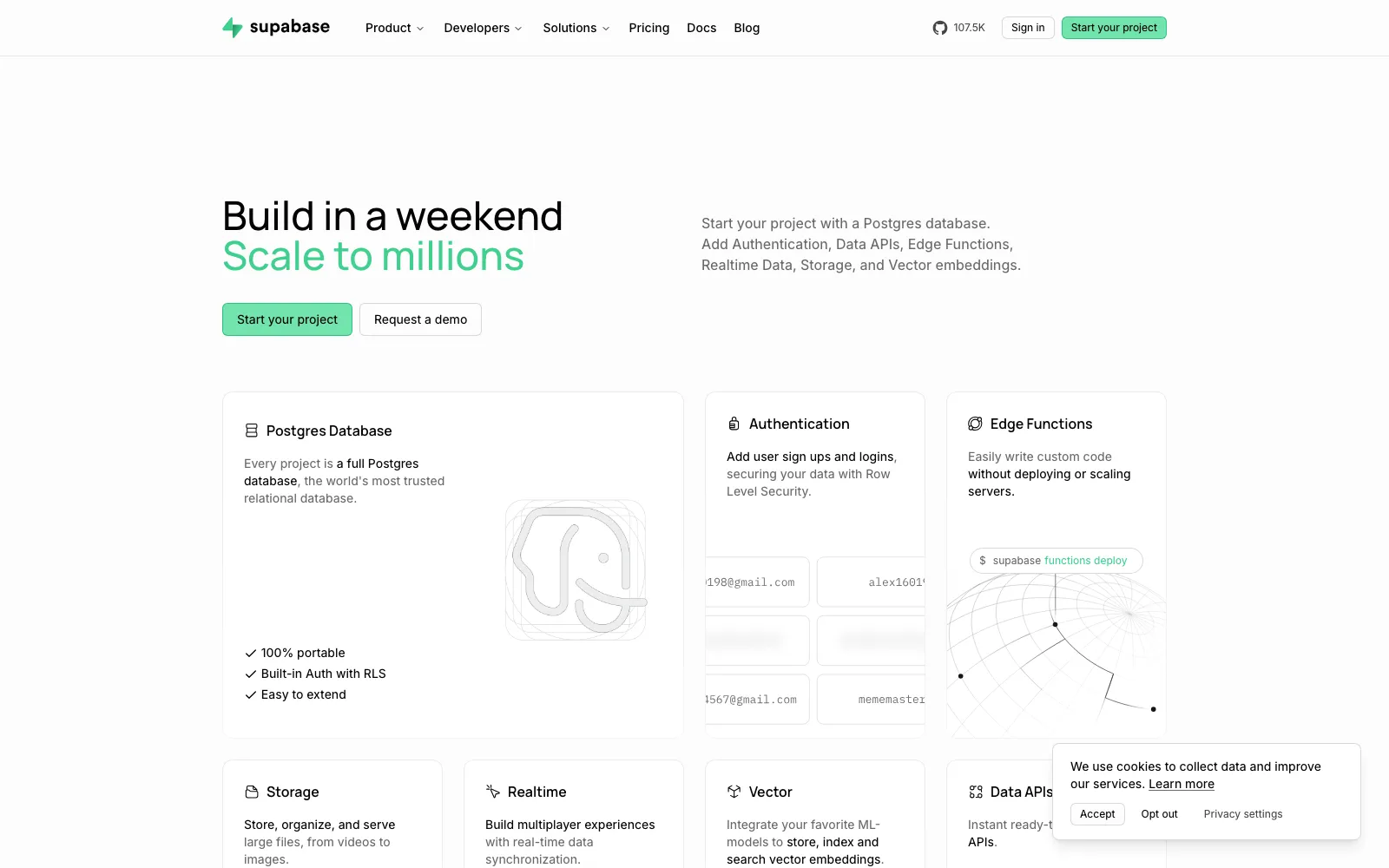
    Supabase wraps a real Postgres database in a full backend platform: auth, row-level security, storage, edge functions, realtime subscriptions, and auto-generated REST and GraphQL APIs. For a solo founder or small team, it collapses several vendors into one dashboard and one bill.

    Because it is standard Postgres underneath, you are never locked into a proprietary query layer. You can connect any Postgres client, run raw SQL, use extensions like pgvector, and migrate out with a plain dump if you ever outgrow it.

    Best for: Teams that want a complete backend (auth, storage, realtime) on top of Postgres without wiring up separate services.

    Pros

    • Full backend suite beyond just the database
    • Standard Postgres with extensions like pgvector
    • Generous free tier with two active projects
    • Strong open-source ecosystem and self-hosting option

    Cons

    • Free projects pause after a week of inactivity
    • Broad feature surface can be more than a simple app needs
    • Connection pooling needs care under serverless load
    • Costs climb once you add storage, bandwidth, and add-ons
    Visit Supabase

    Neon

    Best serverless Postgres
    Visit Neon

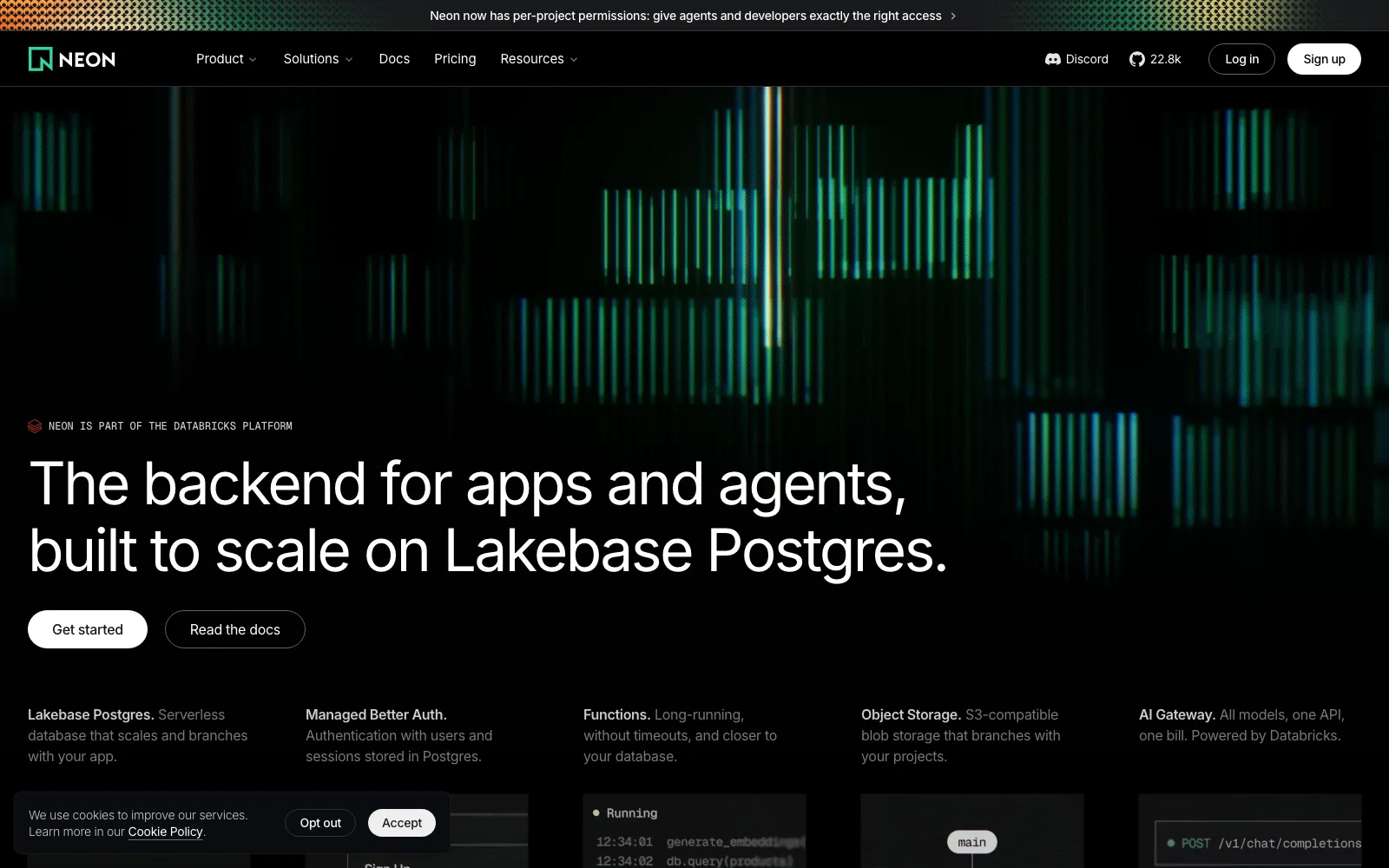
    Neon is serverless Postgres that separates storage from compute, so databases scale to zero when idle and spin back up on demand. You pay for what you actually use, which fits spiky SaaS traffic and side projects that sit quiet between bursts.

    Its headline feature is Git-style branching. You can fork a full copy of your database in seconds for a preview deploy, a test run, or a risky migration, then throw it away. This makes CI and per-pull-request environments genuinely cheap.

    Best for: Developers who want plain Postgres with usage-based pricing and instant database branches for previews and tests.

    Pros

    • Scale-to-zero keeps idle costs near nothing
    • Instant database branching for CI and previews
    • Standard Postgres wire protocol and extensions
    • Clean usage-based pricing that tracks real load

    Cons

    • Cold starts add latency after scale-to-zero
    • Usage-based billing is harder to predict at scale
    • Younger platform than fully managed incumbents
    • Compute autoscaling limits vary by plan tier
    Visit Neon

    PlanetScale

    Best for horizontal scale
    Visit PlanetScale

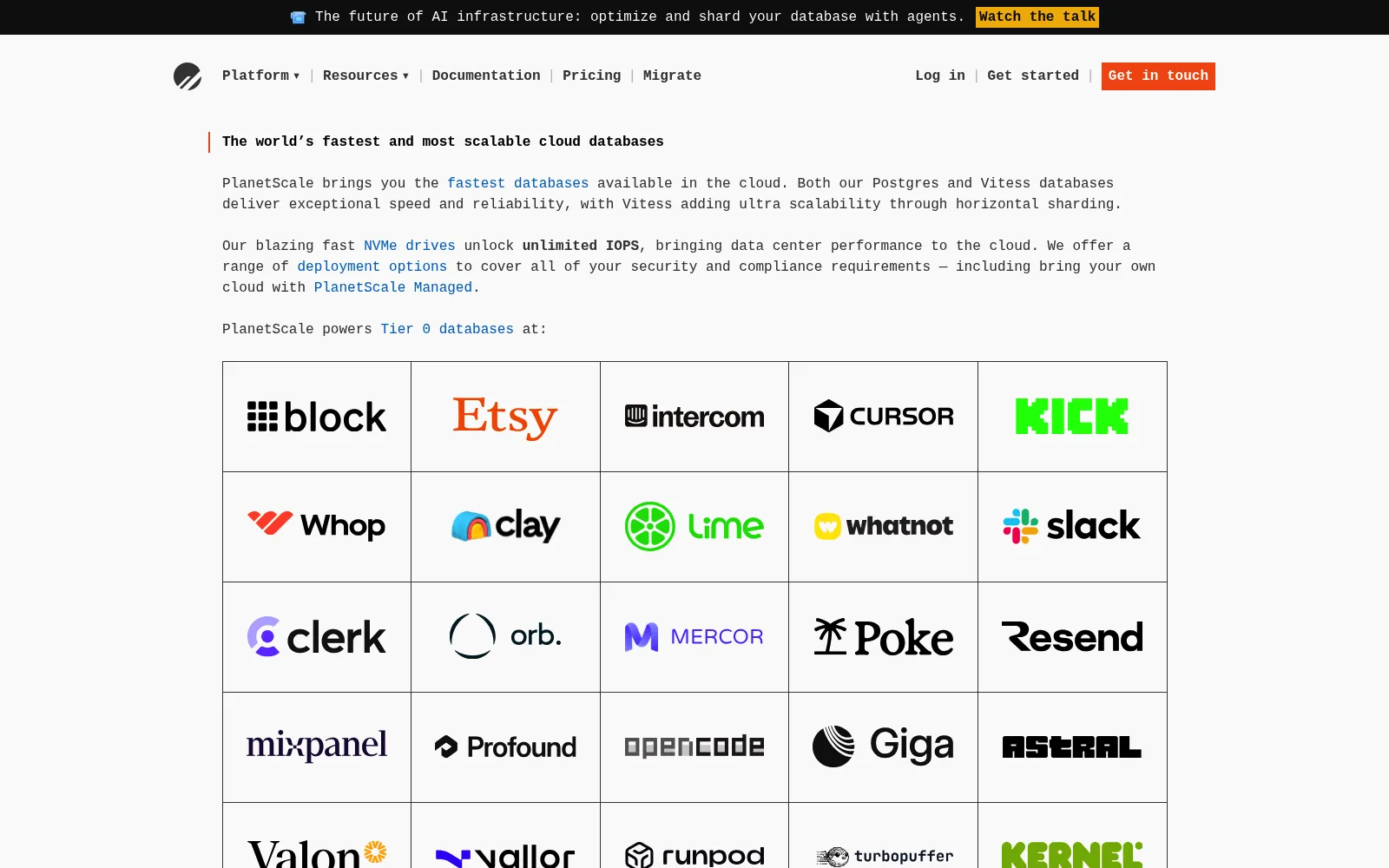
    PlanetScale is managed MySQL built on Vitess, the sharding layer that powers massive workloads at companies like YouTube. It is engineered for horizontal scale, so it stays predictable as your row counts and query volume grow well past what a single instance handles.

    Its standout is non-blocking, branch-based schema changes. You create a branch, apply migrations, and merge a deploy request with zero-downtime online DDL and safe reverts. That workflow removes one of the scariest parts of operating a production database.

    Best for: SaaS teams on MySQL that expect serious scale and want safe, reviewable schema changes with zero downtime.

    Pros

    • Battle-tested horizontal scaling via Vitess
    • Non-blocking, branch-based schema deploy workflow
    • Excellent query insights and performance tooling
    • Handles very high connection and query volume

    Cons

    • No free tier since the hobby plan was retired
    • MySQL, not Postgres, which limits some tooling
    • No foreign key constraints by default in Vitess
    • Higher entry price than serverless competitors
    Visit PlanetScale

    Turso

    Best for the edge
    Visit Turso

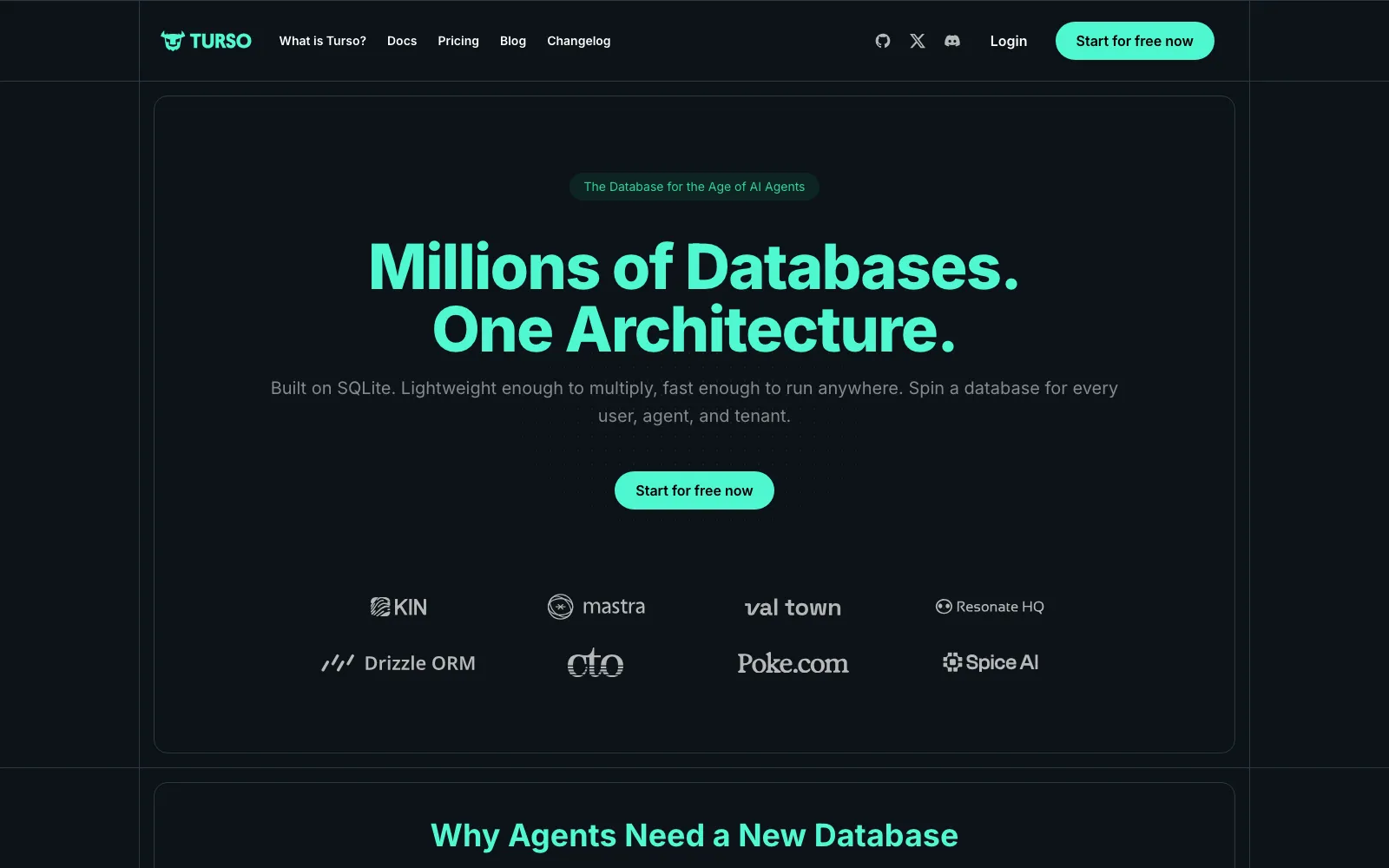
    Turso is built on libSQL, an open fork of SQLite, and runs your database as replicas placed close to users around the world. For read-heavy SaaS apps, that means single-digit millisecond queries from the nearest edge location instead of a round trip to one region.

    SQLite's simplicity is the appeal: an embeddable, file-based engine with a huge tooling ecosystem, now given multi-tenant and multi-region superpowers. Turso also supports per-tenant databases cheaply, which is handy for isolating customer data in B2B products.

    Best for: Read-heavy or globally distributed apps, and multi-tenant SaaS that wants a cheap database per customer.

    Pros

    • Edge replicas deliver very low read latency
    • Cheap enough for a database per tenant
    • Built on familiar, ubiquitous SQLite
    • Generous free tier with high database counts

    Cons

    • SQLite semantics differ from client-server databases
    • Writes funnel to a primary, so write latency varies
    • Weaker fit for heavy write or complex analytical loads
    • Smaller ecosystem than mature Postgres or MySQL
    Visit Turso

    Frequently asked questions

    Should I choose Postgres or MySQL for a new SaaS?+

    For most new SaaS products, Postgres is the safer default thanks to richer types, extensions like pgvector, and broad tooling, which is why Supabase and Neon lead here. Choose MySQL via PlanetScale when you specifically need Vitess-style horizontal sharding and its zero-downtime schema workflow at large scale.

    Which of these has the best free tier?+

    Supabase, Neon, and Turso all offer real free tiers suitable for prototypes and small apps. PlanetScale no longer has a free plan. Supabase pauses idle projects, Neon leans on scale-to-zero, and Turso is generous on database count, so match the free tier to how your app actually runs.

    What is database branching and why does it matter?+

    Branching forks a full copy of your database, schema and often data, in seconds so you can test migrations or spin up preview environments without touching production. Neon and PlanetScale both offer it, and it turns risky schema changes and per-pull-request testing into a routine, cheap operation.

    Which database is best for a multi-tenant B2B SaaS?+

    If you want strong per-tenant isolation, Turso makes a database per customer cheap enough to be practical. If you prefer a shared Postgres with row-level security, Supabase handles tenant isolation well. PlanetScale suits multi-tenant apps that need to shard across very large data volumes.

    The verdict

    Default to Supabase if you want a complete backend on Postgres, or Neon if you want lean serverless Postgres with branching and scale-to-zero. Reach for PlanetScale when horizontal MySQL scale and safe schema changes are the priority, and Turso when low-latency edge reads or a cheap database per tenant define your app.

    Related guides

    Guide · DirectoriesBest Directory Submission Services in 2026Guide · SaaSHow to Start a SaaS in 2026Guide · AIHow to Start an AI Startup in 2026Guide · BloggingHow to Start a Blog in 2026
    Alternative.tools

    Alternative.tools review team

    We are the editorial team behind Alternative.tools, an independent platform for unbiased reviews of newly launched websites, tools, and products. We test tools hands-on, track pricing and features as they change, and publish practical comparisons and how-to playbooks so you can choose the right tool faster, without the marketing spin.

    About usAll guidesHow-to playbooks

    Sources — official pricing/docs:

    SupabaseNeonPlanetScaleTurso

    Building a SaaS? Submit it to the directory to get discovered.